
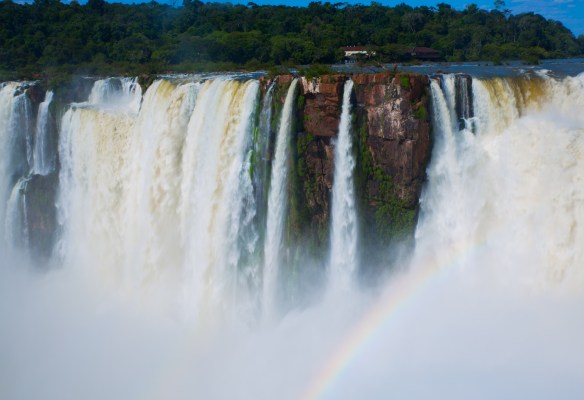
Iguazu Falls is easily one of the most beautiful places I have seen. It’s no wonder that these magnificent waterfalls frequently find themselves on lists of natural wonders. Though it is understandably a touristy area, it is nonetheless worth wading through the crowds to see these incredible sights. As we arrived at the airport near Puerto Iguazu, it quickly became evident that we had found ourselves in a much more tropical environment.
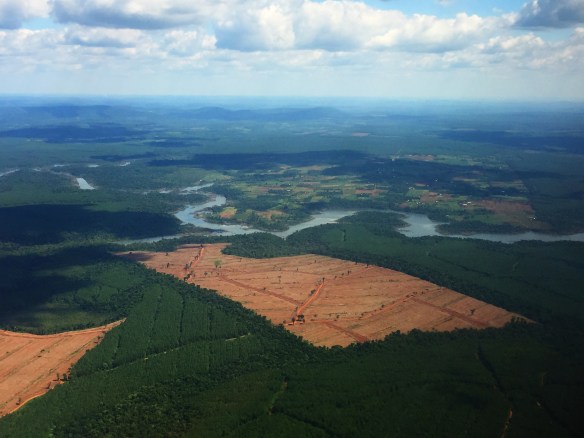
After getting spoiled in the temperate Bariloche climate, everything felt oppressively hot and muggy. And, in light of some recent issues with dengue fever, the first words our B&B owner said to us were, “Do you have bug spray?” Soon after, we learned of the Zika virus in Brazil, which caused us to be even more careful to avoid mosquitos. We spent the rest of our stay there covered in deet and sunscreen, and all to good effect, as neither of us suffered any ill effects throughout our stay.
We retreated to our room briefly to change and found this little guy floating in the back of the toilet.
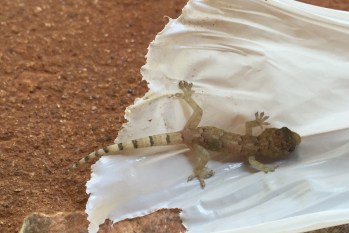
I “rescued” him and released him outside, but later considered he may have been happier in the cool water then outside in the heat. As evening set in, we rode into town for dinner. I had a local fish cooked in parchment paper, which was quite delicious and a welcome change from the steak I’d been eating regularly.


After dinner we went to el Hito de las Tres Fronteras, the point at which Argentina, Brazil and Paraguay meet. It was dark, so we returned another time in daylight, but I had fun photographing the children playing in the fountain.


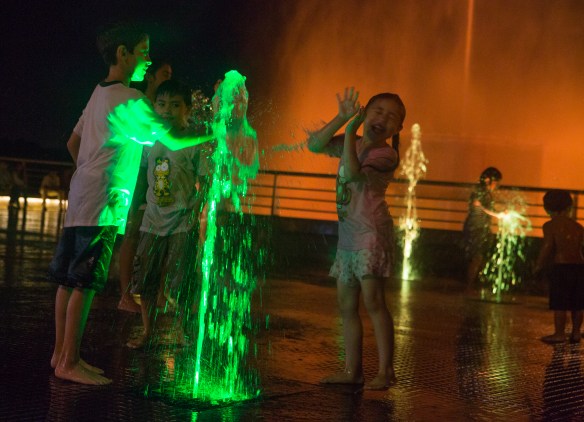



There was also a cultural light show at the end of the evening, projecting various forms of dance and sport upon a spray of water to create an impressive, three dimensional presentation.

We went back to our B&B after that and settled in for the night.

We woke up to a lovely breakfast, including fruit from the trees on the property. The owner had some pretty sneaky cats. We stayed at Casa Yaguarete. Our owner was very friendly and accommodating. We would recommend this place to other travelers.


With full bellies, we headed down the road and caught a taxi to the park.


The first thing we saw was not a waterfall, but some adorable coatis.


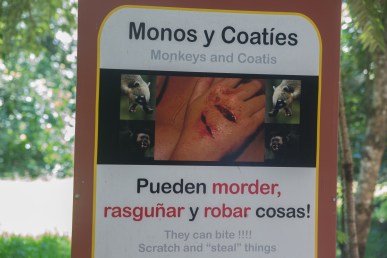
They seemed friendly and demonstrated a complete lack of fear of humans, so they came rather close to us, but the posted signs were pretty clear. They’re crafty animals; at one point we saw them steal some food right out of a person’s backpack.
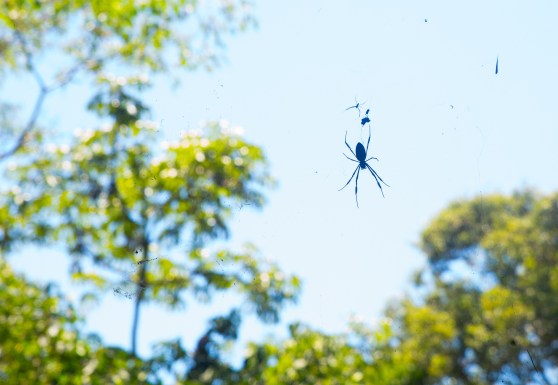
We also saw plenty of colorful birds and some very impressive spiders.

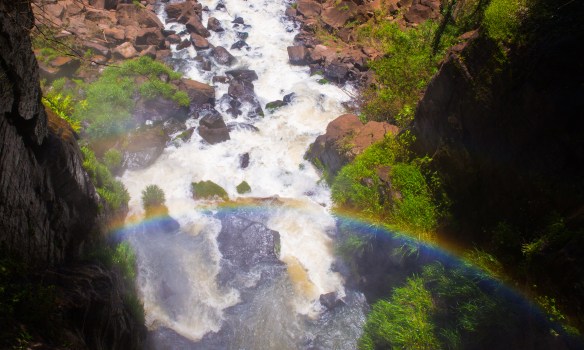
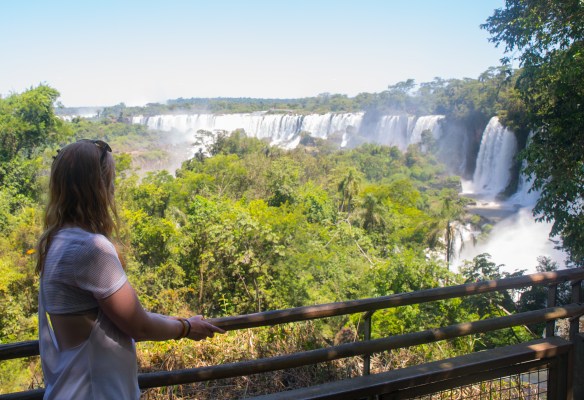
Our first glimpse of the waterfalls was magnificent.
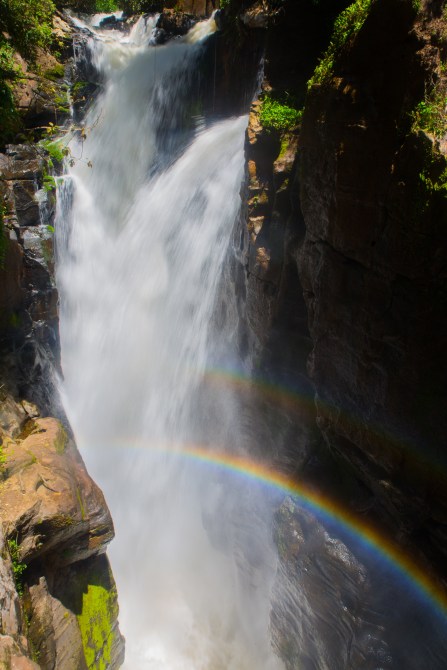
Everything was so lush. Having come from Bariloche, which had not seen rain in some time, the vivid, green tropics of northern Argentina made it feel like we’d traveled further than we had.
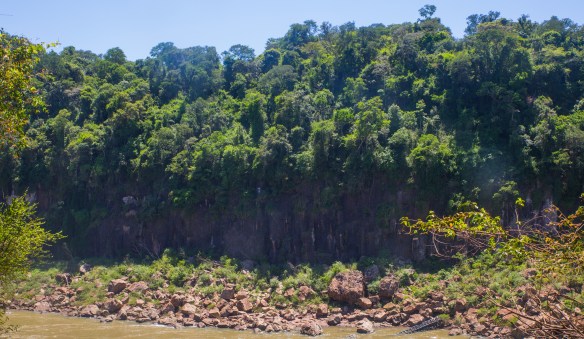


The further we ventured, the more impressive everything became.
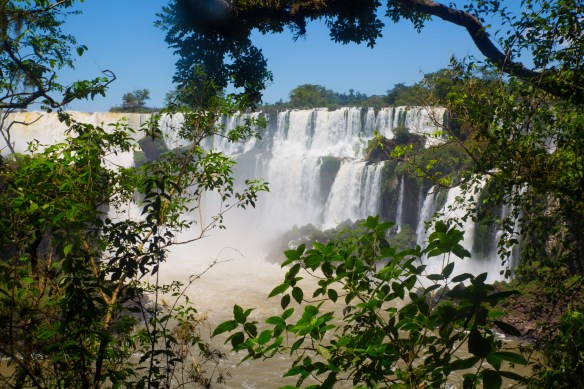
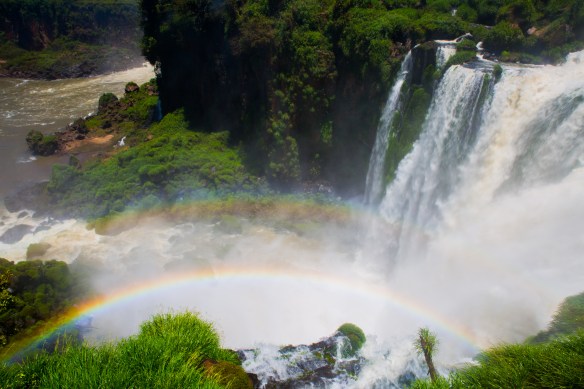
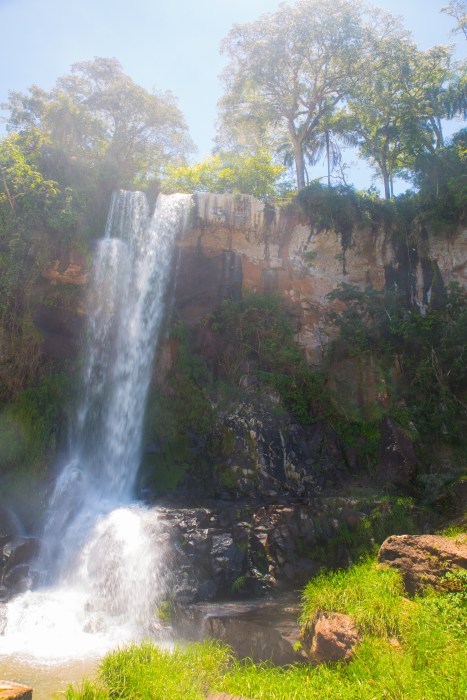


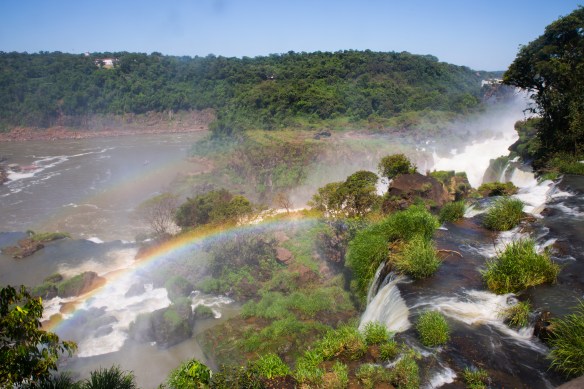

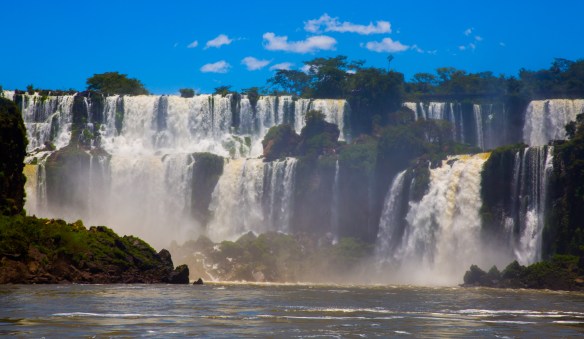
We took a boat ride under the waterfalls. Of course I couldn’t have my camera out most of the time.


we saw a bunch of beautiful butterflies, mariposas as they are called in Spanish, in all colors.


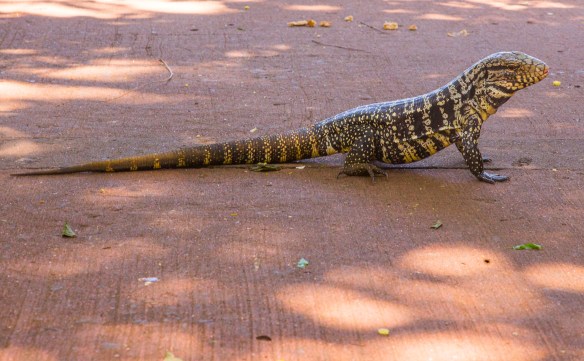
There was also an iguana, casually hanging out on the walkway.
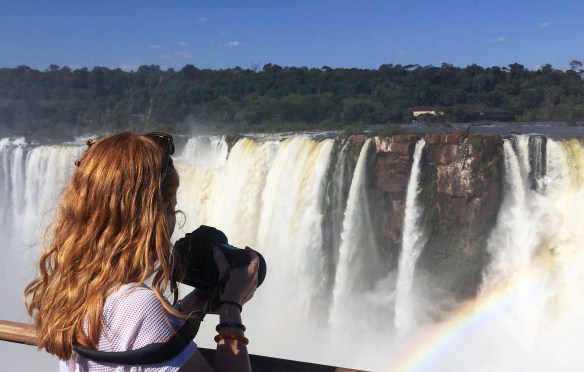
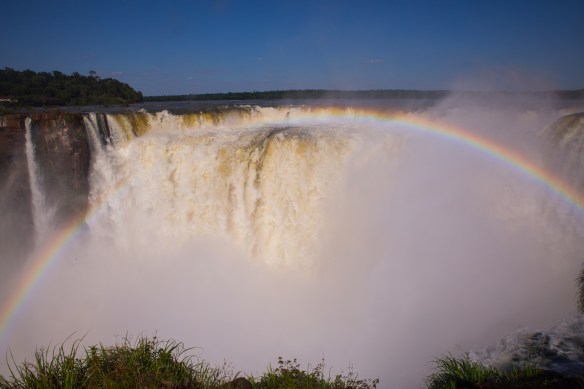
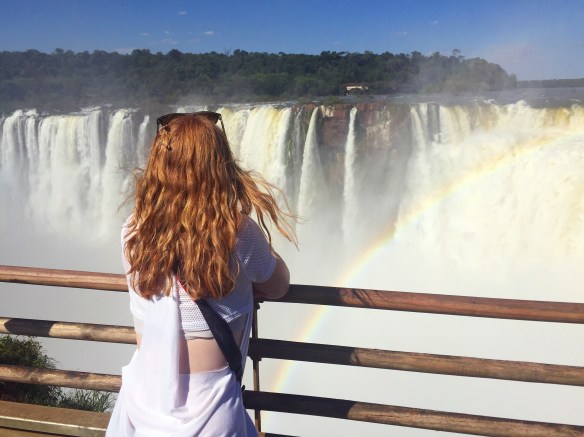
The part of the falls that is perhaps most impressive, is nicknamed “Devil’s Throat.” It really was a site to behold.




We went back to el Hito after our day at the park and saw where Argentina, Brazil and Paraguay meet in the light. We are standing in Argentina, Paraguay is to the left and Brazil is to the right.
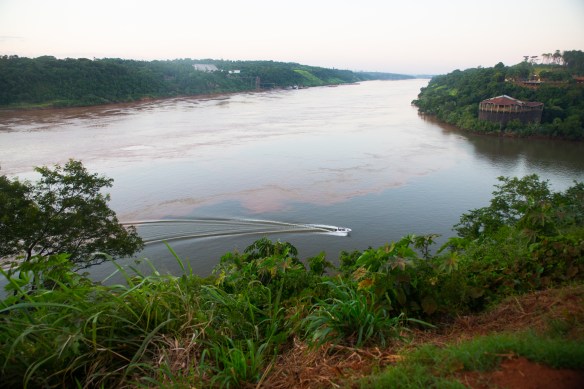

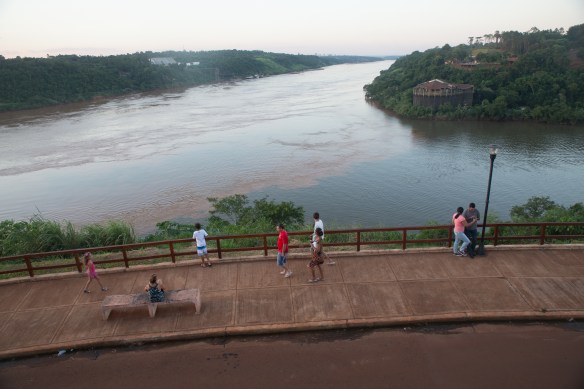
This is Argentina.
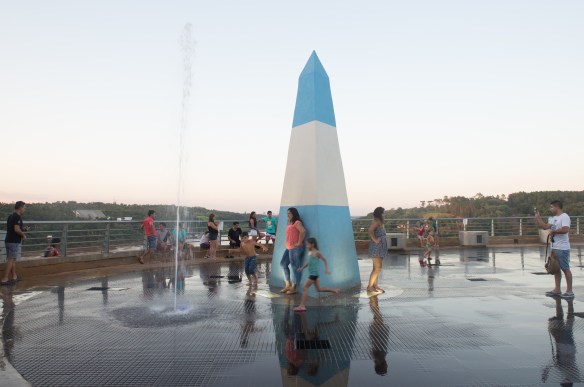
This is Brazil.
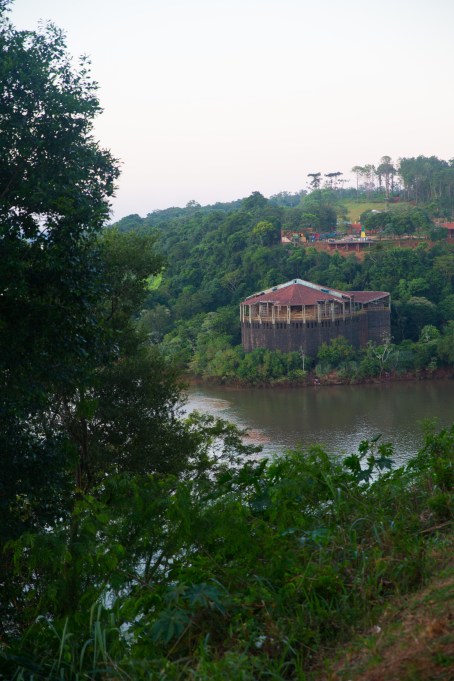
And this is Paraguay.
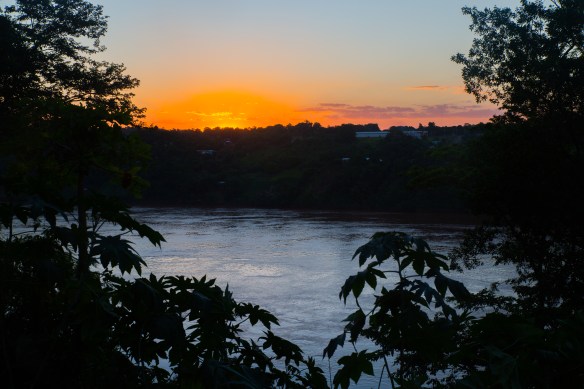
We returned to our B&B for dinner that night.


The next morning, we started our day out right with our first ever real mate (a strong, local tea). The owner’s employee, shown here feeding the dogs and cats, showed us how to properly drink it the night before. They made us a tasty breakfast, complete with mango juice made from the mango trees on the property.


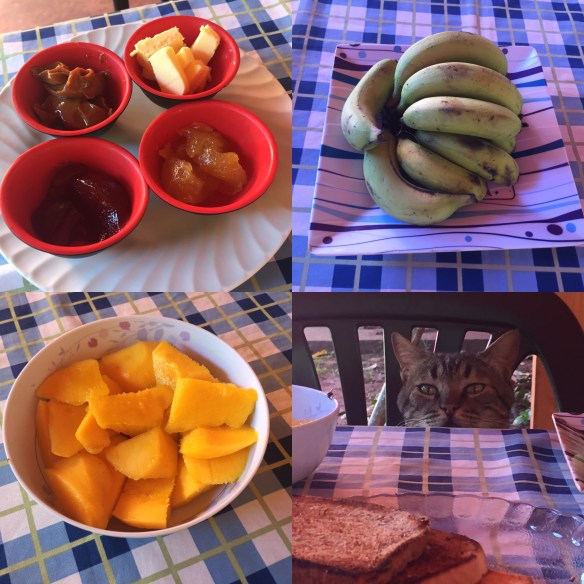
The owner has a bird, dogs and cats. She loves them all.


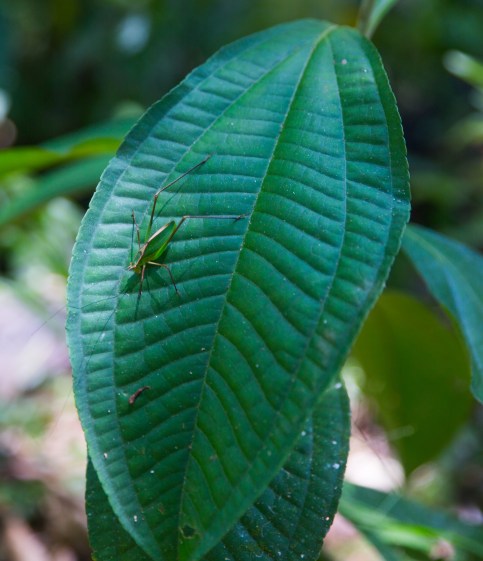
For our second full day in Iguazu, we were determined to see monkeys. At the advise of our host, we took a less popular trail in the park with the hope that with fewer people on the trail, the monkeys would be more likely to show themselves. We never did find any monkeys, but we did see lots of other cool things. We enjoyed walking through the jungle and soaking in the sights, sounds and smells. I enjoyed taking some detail shots.
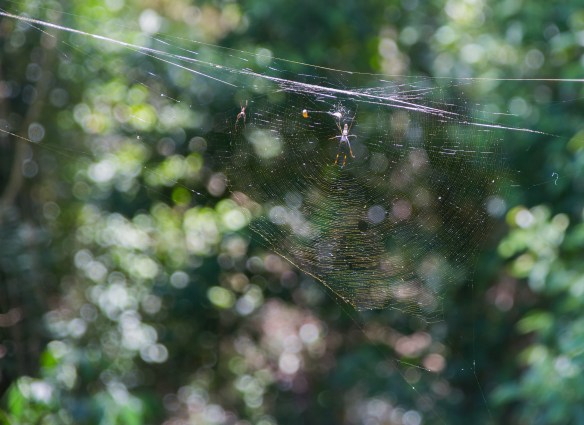


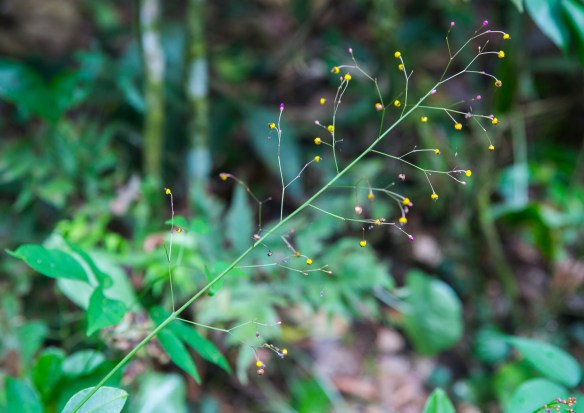
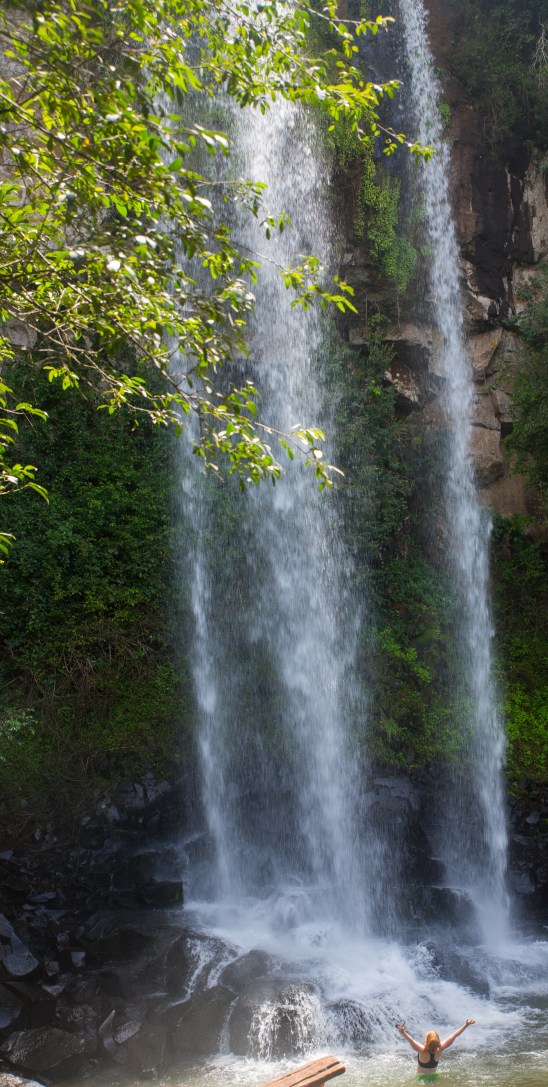
At the end of our hike, we came to a watering hole with a lovely little waterfall. I went swimming in the cool water and felt the force of the falls on my face.


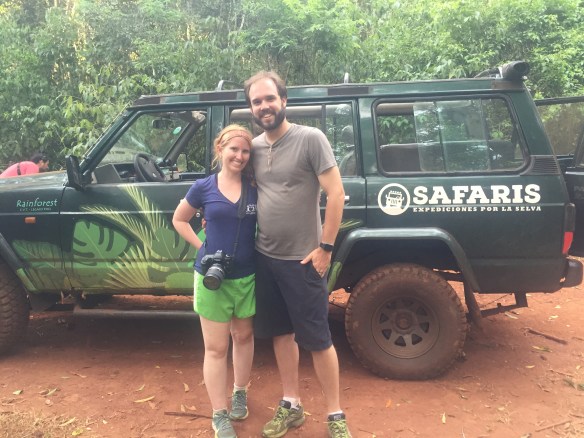
Having not found any monkeys, we decided to take a safari tour deeper into the rainforest.
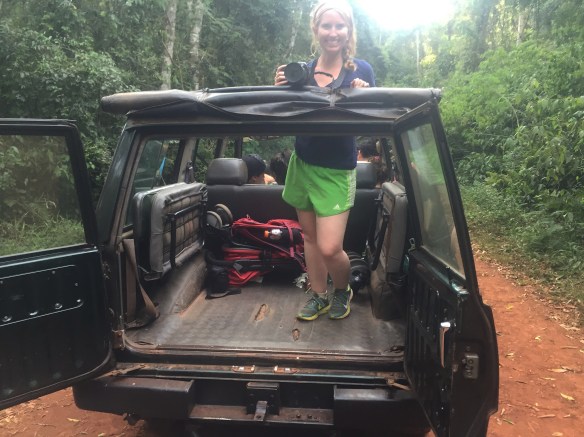
The rangers told us on the tour the jaguars are the real treasure of the jungle. They spoke of the magnificent animals as if they were unicorns. They told us it is rare to see one in the wild. Loss of habitat and hunting have made them endangered, but the rangers work hard to help preserve the area that is left for them. Much like the monkeys, we did not see a single jaguar, but the tour proved to be very interesting nonetheless.
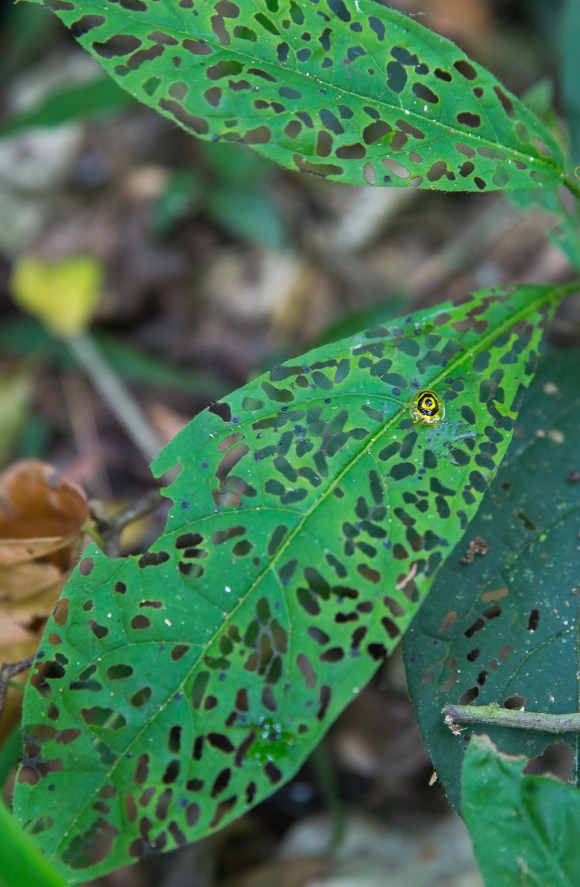
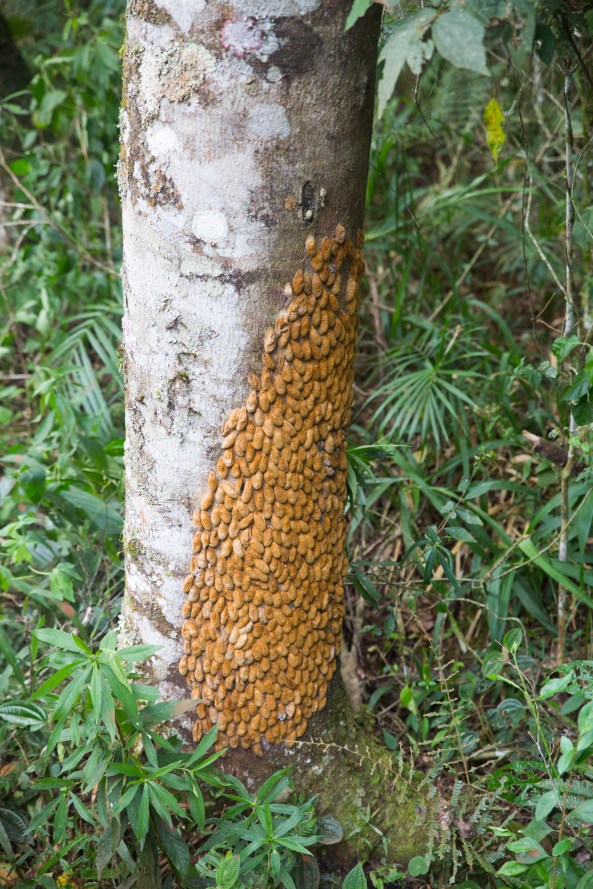
We were told there are 200 different kinds of butterflies in Iguazu. Above, a photo of a leaf eaten up by caterpillars. The rangers taught us that the caterpillars eat the leaves without disturbing the veins, so as to not kill the leaf. Below, cocoons from one species of butterfly attached to a tree.


Here is a video of us driving through the forest. A butterfly can be seen flying in front of the jeep.
The rainforest is dense and lush. It is very different from the forest in Bariloche. There are over 2,000 species of plants and animals thriving here.


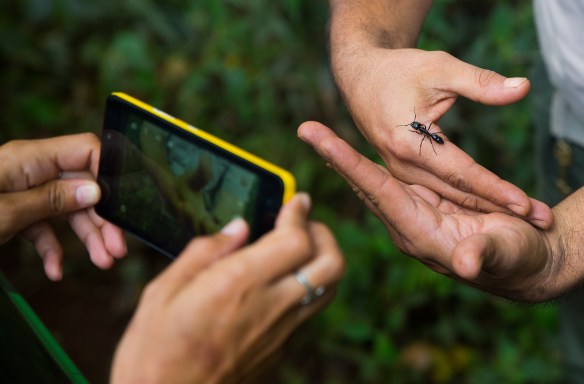
There are giant ants. We saw some on our hike, but I was able to really get scale for my photo of them when one of the rangers picked one up.

This is a papaya. One of the rangers gave it to me and we ate it the next morning,

There is an endangered tree that can also be found here. It’s wood is a brilliant pink color and it used to be commonly used for beautiful pink furniture. However, it is now illegal to cut down these trees. One of them had fallen down on it’s own, however, and one of the rangers chopped off pieces of it to give to us so we could see the brilliant pink inside.
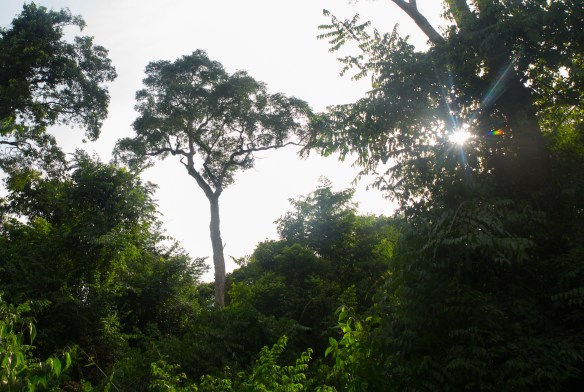


Here is a sample of some of the other species of vegetation we saw.


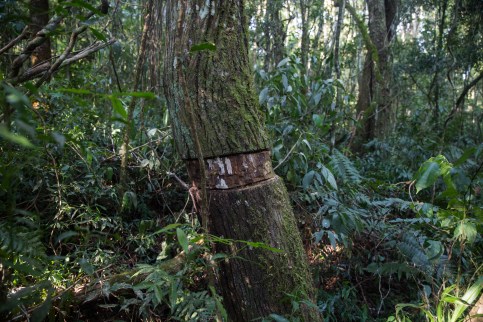
They taught us that if you want a tree to die, all you have to do is cut around the circumference of the trunk. The rangers had done this to this tree because it is an invasive Chinese tree, not native to this forest, and it is destroying indigenous species.
The rangers here really seemed passionate about what they do. We had a fabulous time being adventurers in the rainforest, even if I didn’t find my monkeys.
We wrapped up our time in Iguazu with a delicious dinner, complete with fresh heart of palm from the area. We thoroughly enjoyed this wondrous place.




























 Everyday moments. Beautiful memories.