What makes an American gator different from other gators? The American ones eat Marshmallows.

Alligator Eye in the Marsh

Two old college friends of ours showed up in New Orleans on a road trip and talked me into going on a swamp tour with them. Considering Andrew’s original plan for his trip to NOLA was to take us noodlin’ (a very southern, redneck activity that involves sticking your hand in a swamp hole in hopes that a catfish will bite it), I was happy to compromise with a swamp tour. We originally planned on renting canoes, but the swamp was too thick with vegetation and the canoe service was closed, so we opted for an airboat tour.

Airboat tour in Lafitte, LA

It was raining, as it has been for days now, but I was determined to seize the opportunity to capture some gators in their natural habitat. I brought my camera gear, put the raincoat protective coating on my camera bag and placed it in a garbage bag. I also fashioned a garbage back into a raincoat as they were out of panchos.
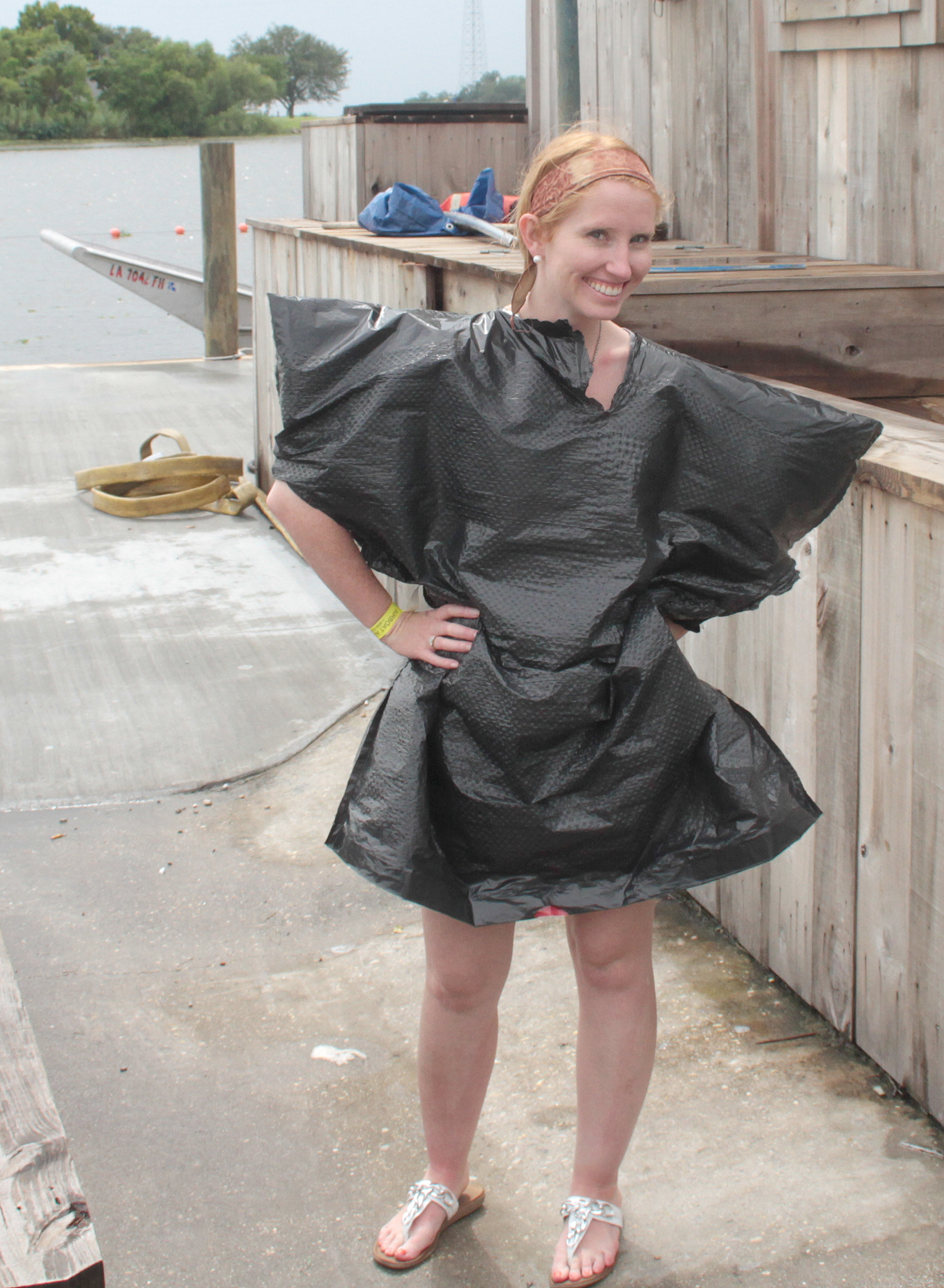
Lady GaGa style

The airboat actually moves pretty fast and is very loud. We had to protect our ears with earmuffs and I held my camera tight to protect it from splashing water.
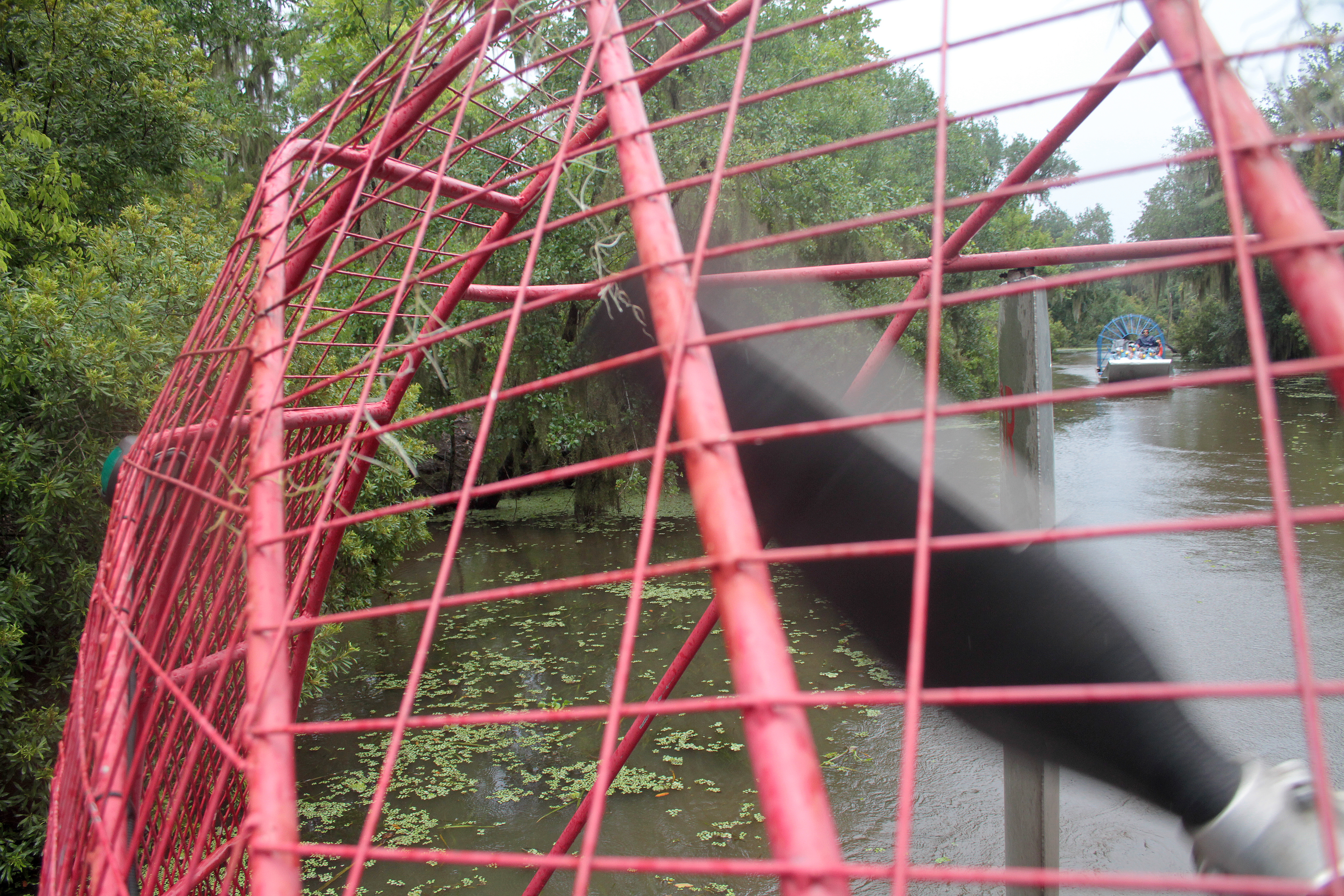
Airboats on the Move

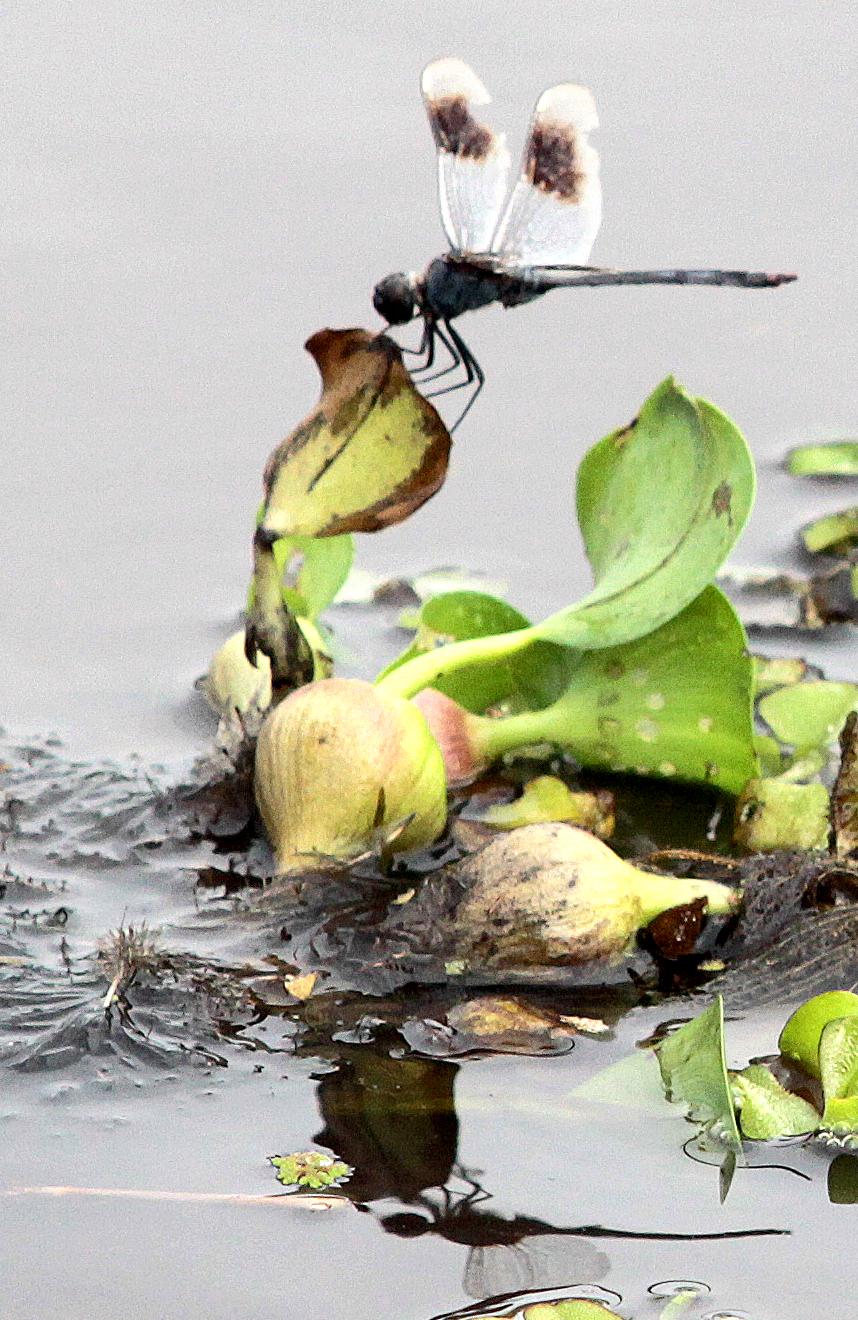
At first we couldn’t find any alligators, but the scenery was very unique and it was fun to see it from the water. We also so a lot of cool birds, fish and dragonflies.
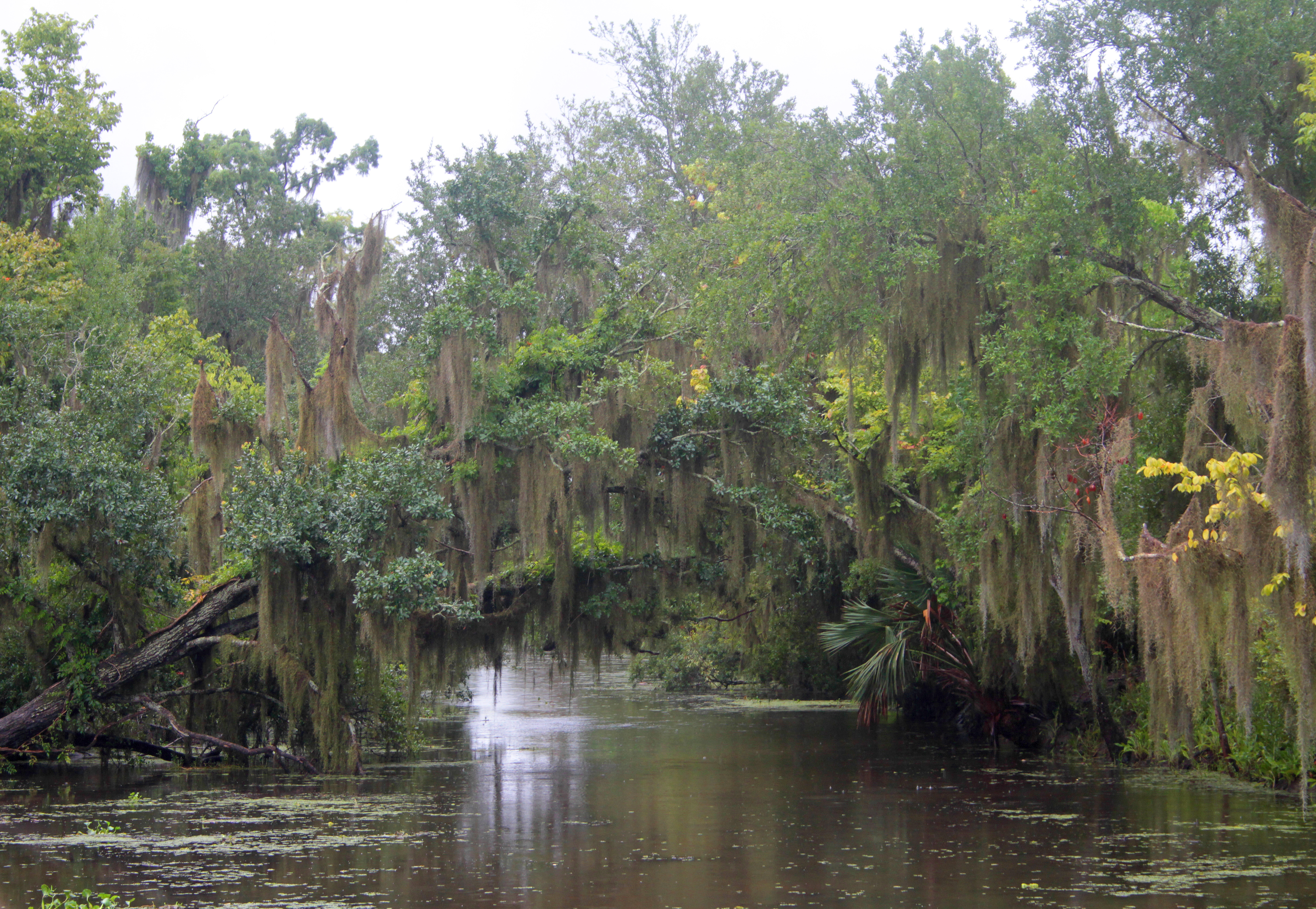
Swamp Tour Scenery

Egret – the location where the alligators lay their eggs

Dragonfly

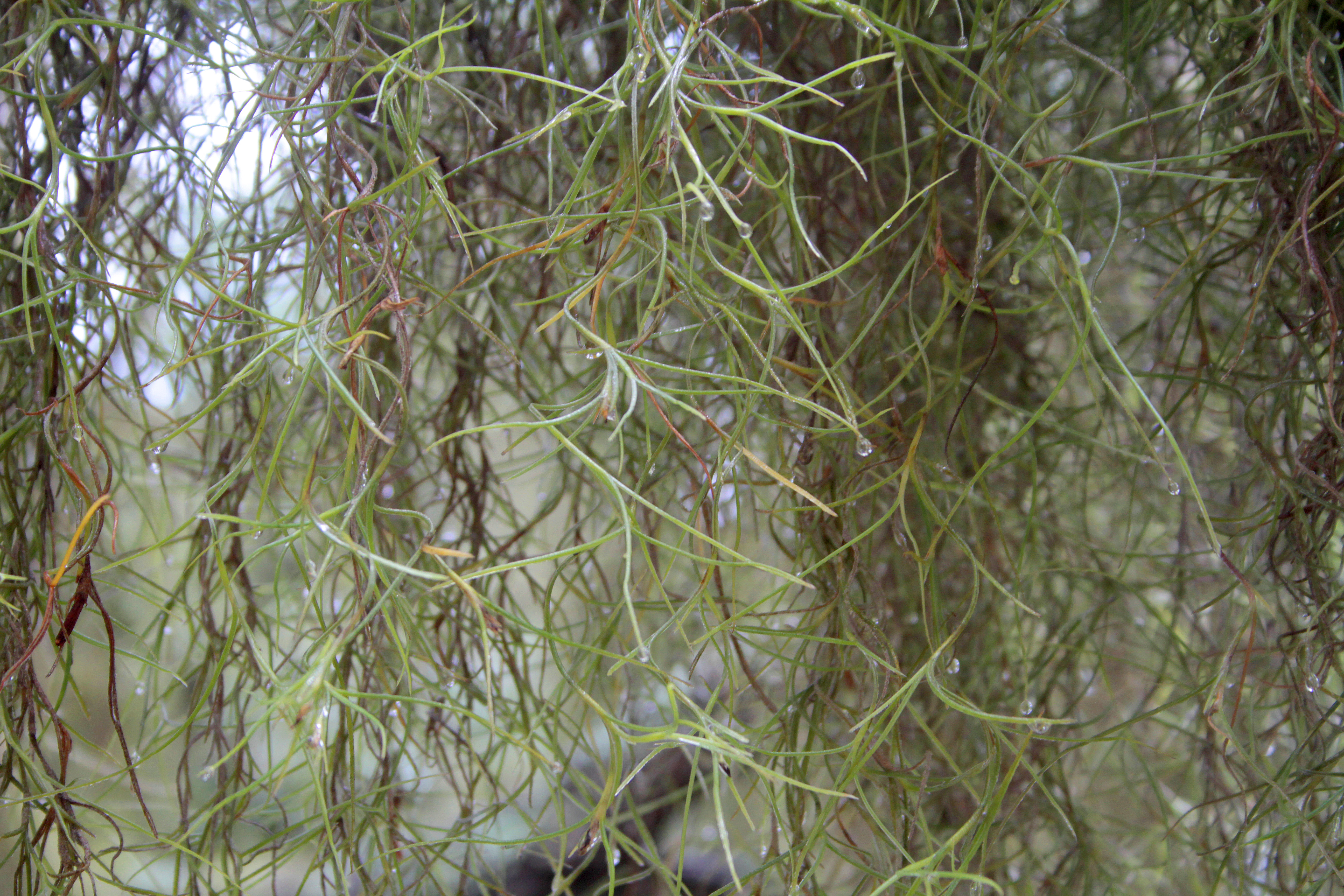
Spanish Moss- used for thread and mattress stuffing during the Civil War

Finally we began to find alligators and suddenly they were everywhere, though mostly smaller ones.
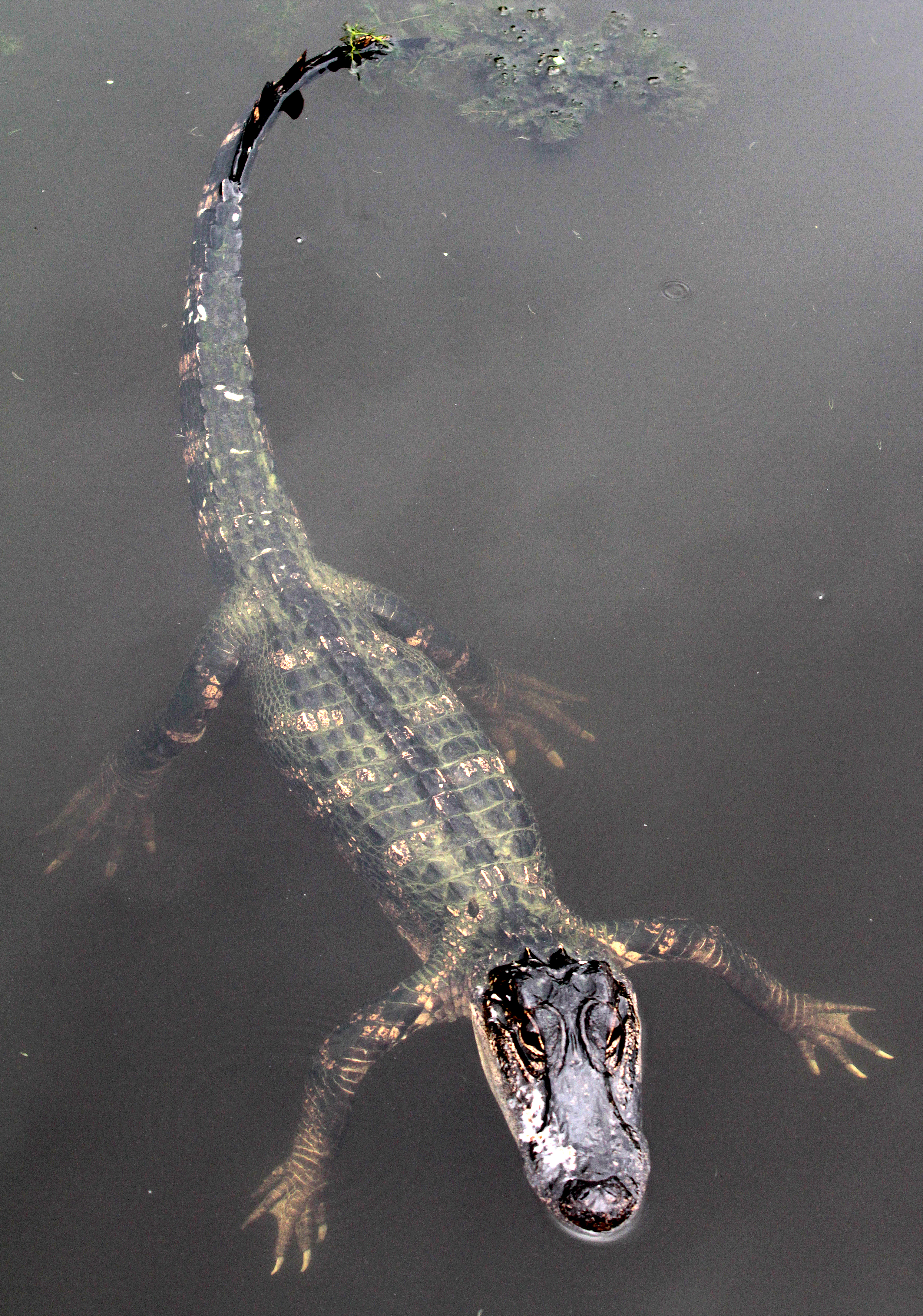
Friendly Alligator- my friend compared them to dogs because they would come right up to the boat, as long as the tour guide fed them marshmallows.
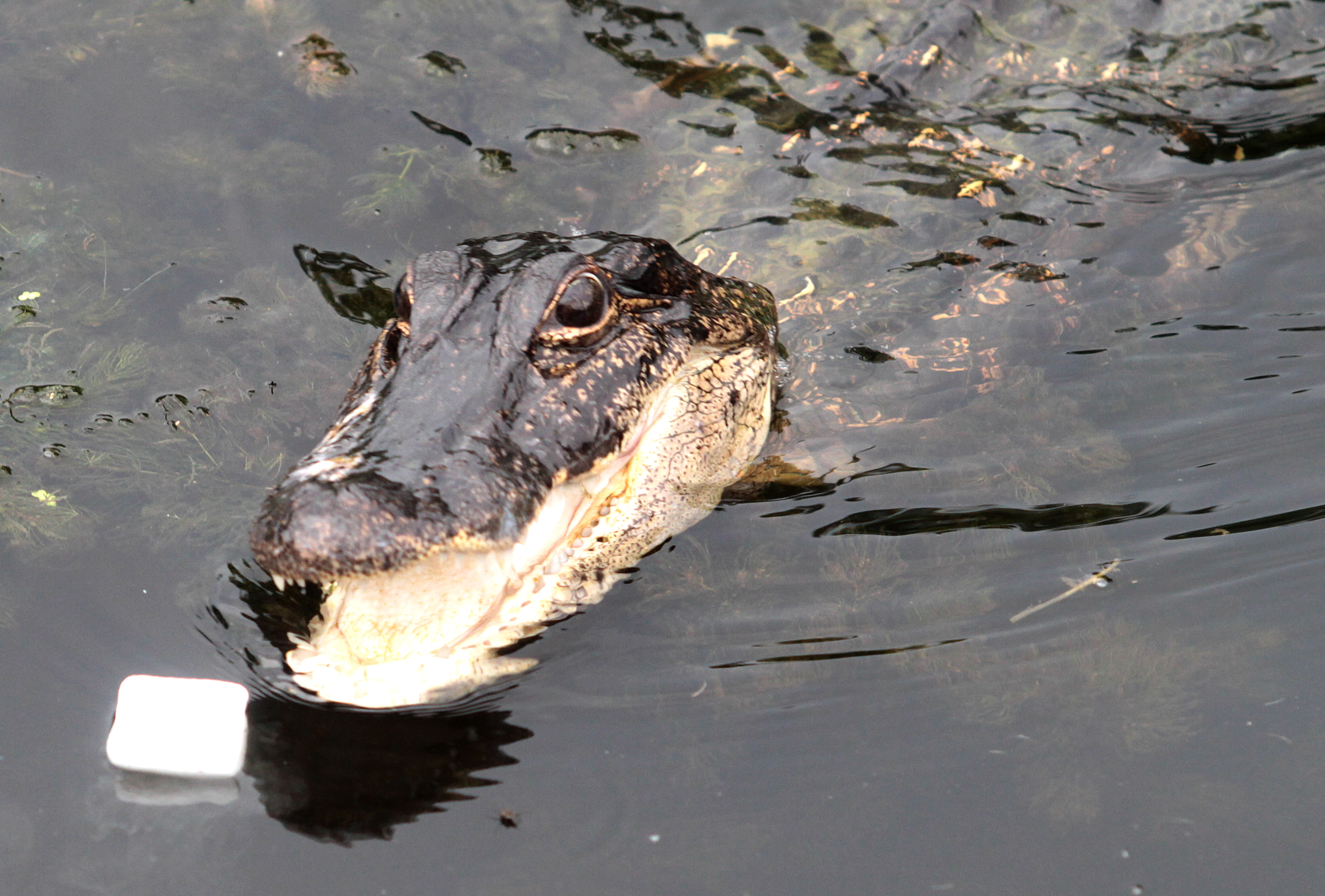
Alligator Treat
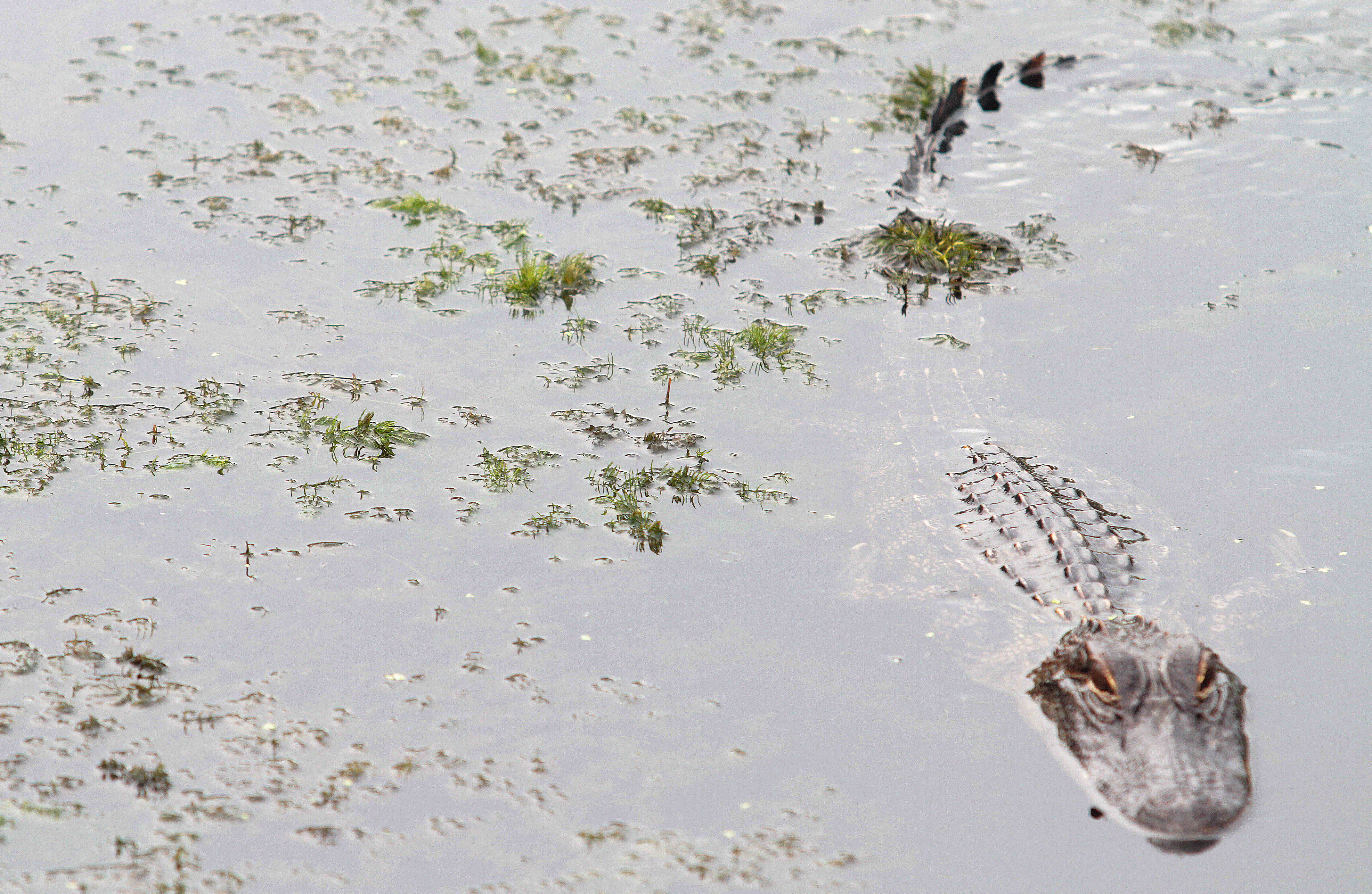
Farm Alligator

The above picture shows a farm alligator. It can be differentiated because there are notches taken out of its tail. They are often returned to the wild at about this size. The alligators used to be endangered, but now they are back to being over-populated. This means that they can be hunted again, as they are in this very swamp. There are about 5 million alligators in the world, and 2 million of them are in Louisiana.
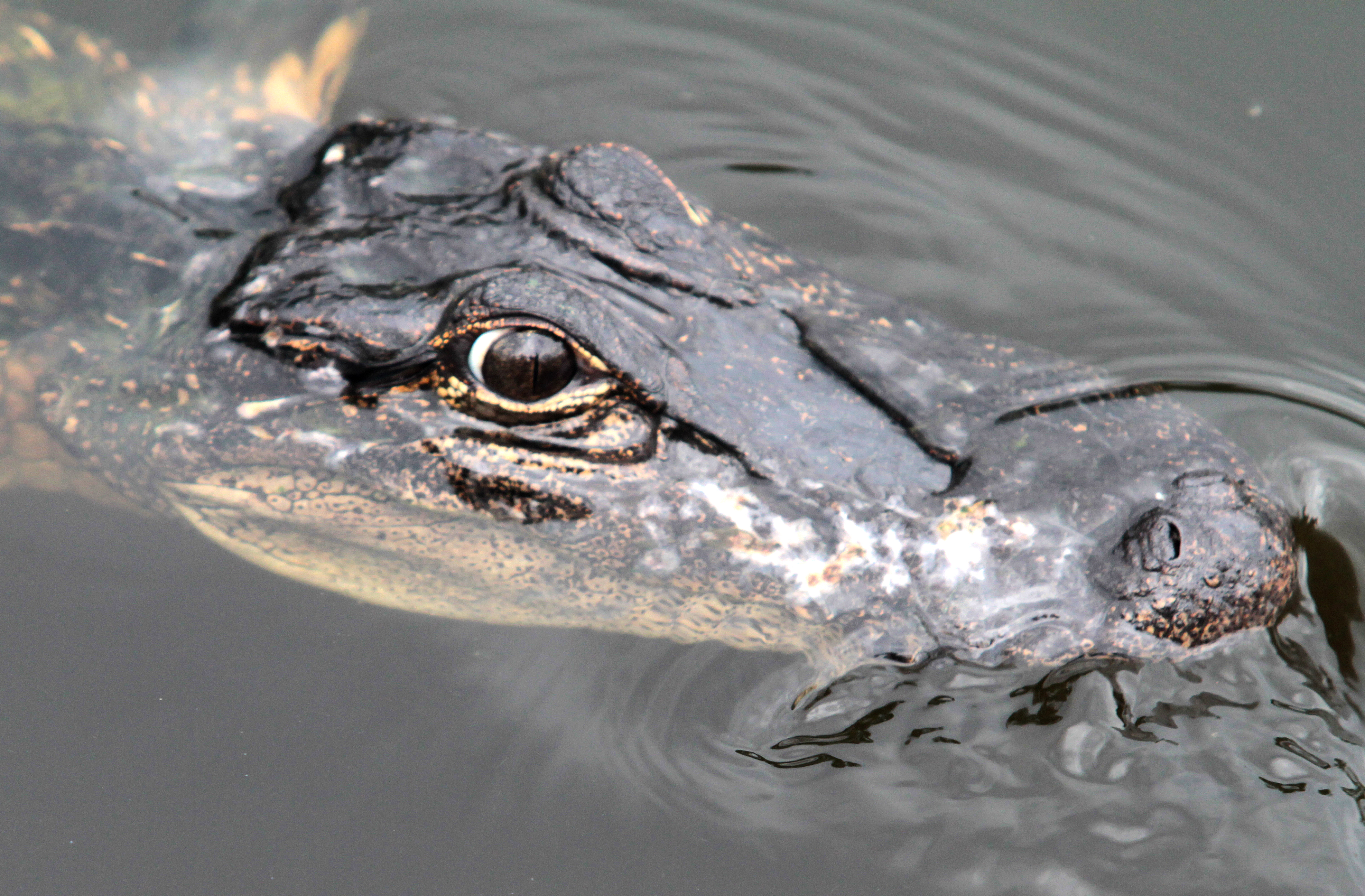
Up Close and Personal

The price for alligator meat has gone down recently, to $6 per foot, causing alligator hunters to offer swamp tours to support their livelihood. Their trapping system avoids the little alligators, capturing the large ones with a hook in their stomach until they are picked up the next day and shot in the head. The guide told us they are killed quickly this way, but he failed to address the fact that the alligator had been hanging out with a hook in it’s stomach for 24 hours. I expected the tour to be more of a wildlife reserve, but apparently it is just private property and anything that is legal in Louisiana goes.

Alligator on a Log- It is rare to seem them out of water, but it gives you a better idea of the size of the animal.
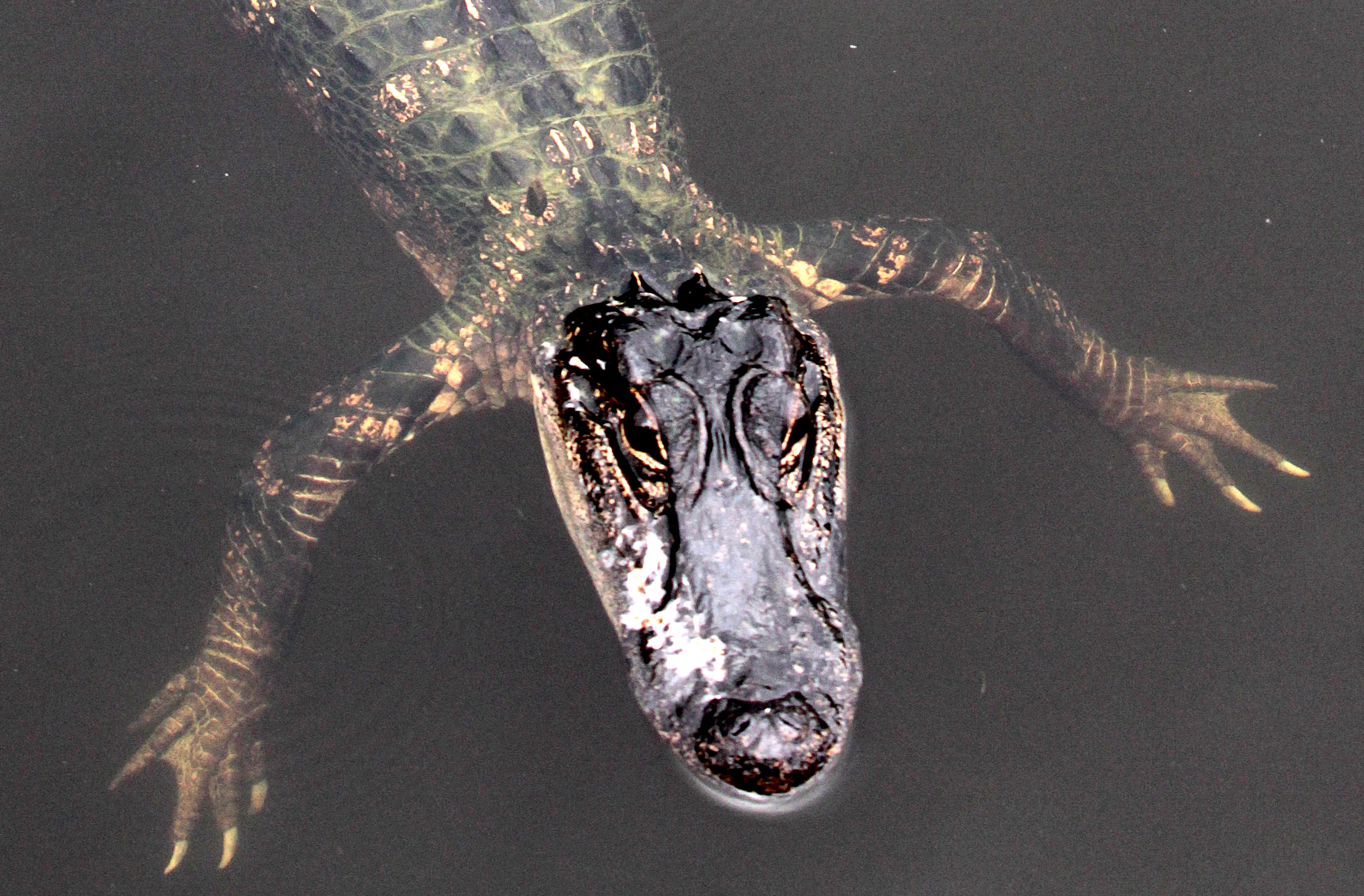
Hanging Out

My swamp tour partners- John and Andrew

As hick as the bayou of Louisiana is, there is something romantic about it, perhaps because it is such a different world. It is a wonderful place to photograph. I still want to do some kind of longterm story about it, but I need to find a unique approach. Perhaps I have just been looking at a lot of National Geographic photos lately, many of them wildlife photos, on my new ipad app, but experiences like this make me want to be a wildlife photographer. In the end, however, I know it takes a lot more patience than I have.
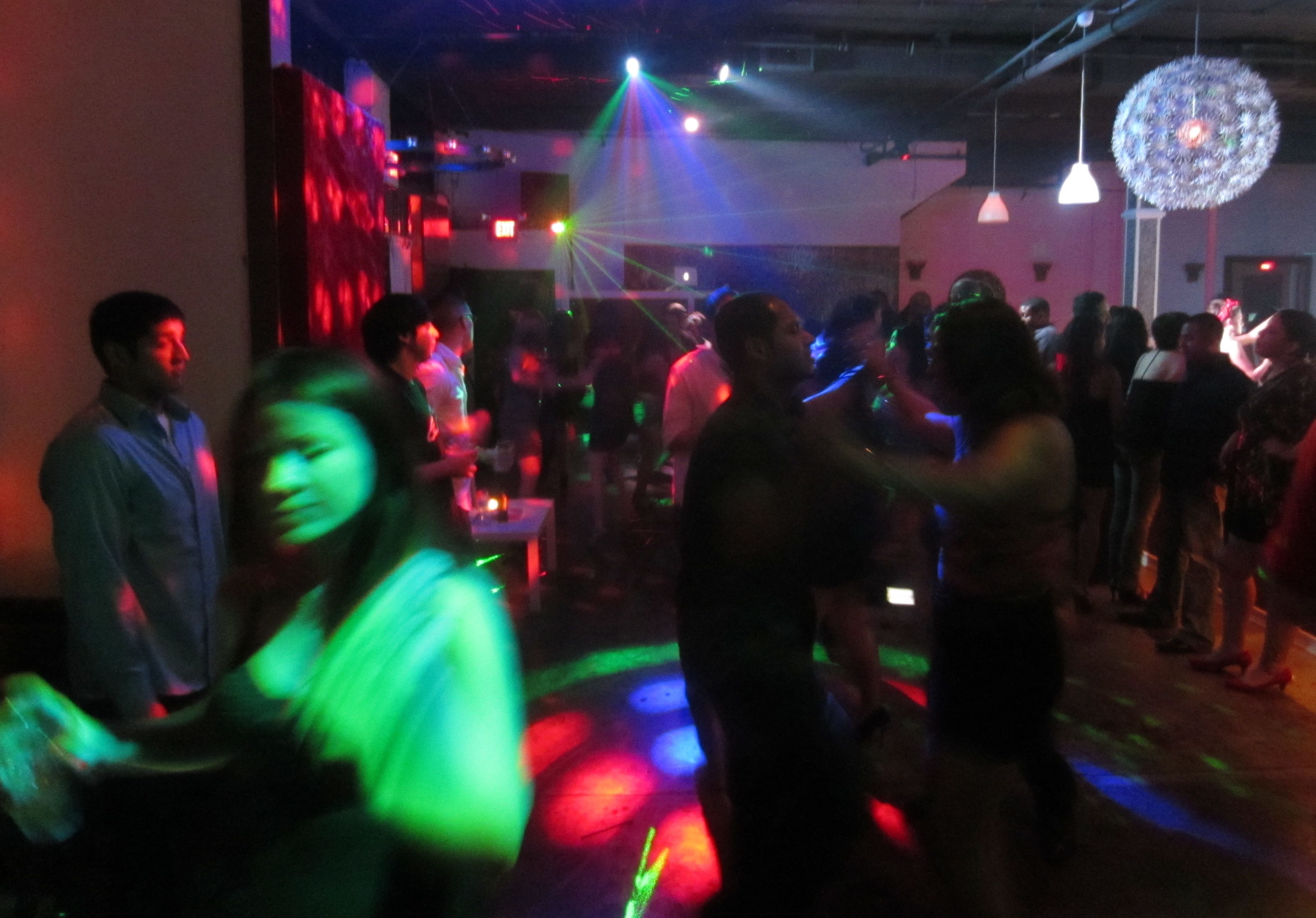
Use the light you have

More often than not, flash is not your friend. It should be avoided when possible. Many subjects are much more interesting when the available light is used to your advantage. For instance, in this photo, the different colored lights and the shapes they are making are what gives the photos its appeal. Mind you, there is not much to this photo. It is a simple snapshot of a club I took on my little point-and-shoot camera, but it is still more interesting than it would have been with flash. When used improperly, flash flattens your picture and makes your subject look completely lifeless.
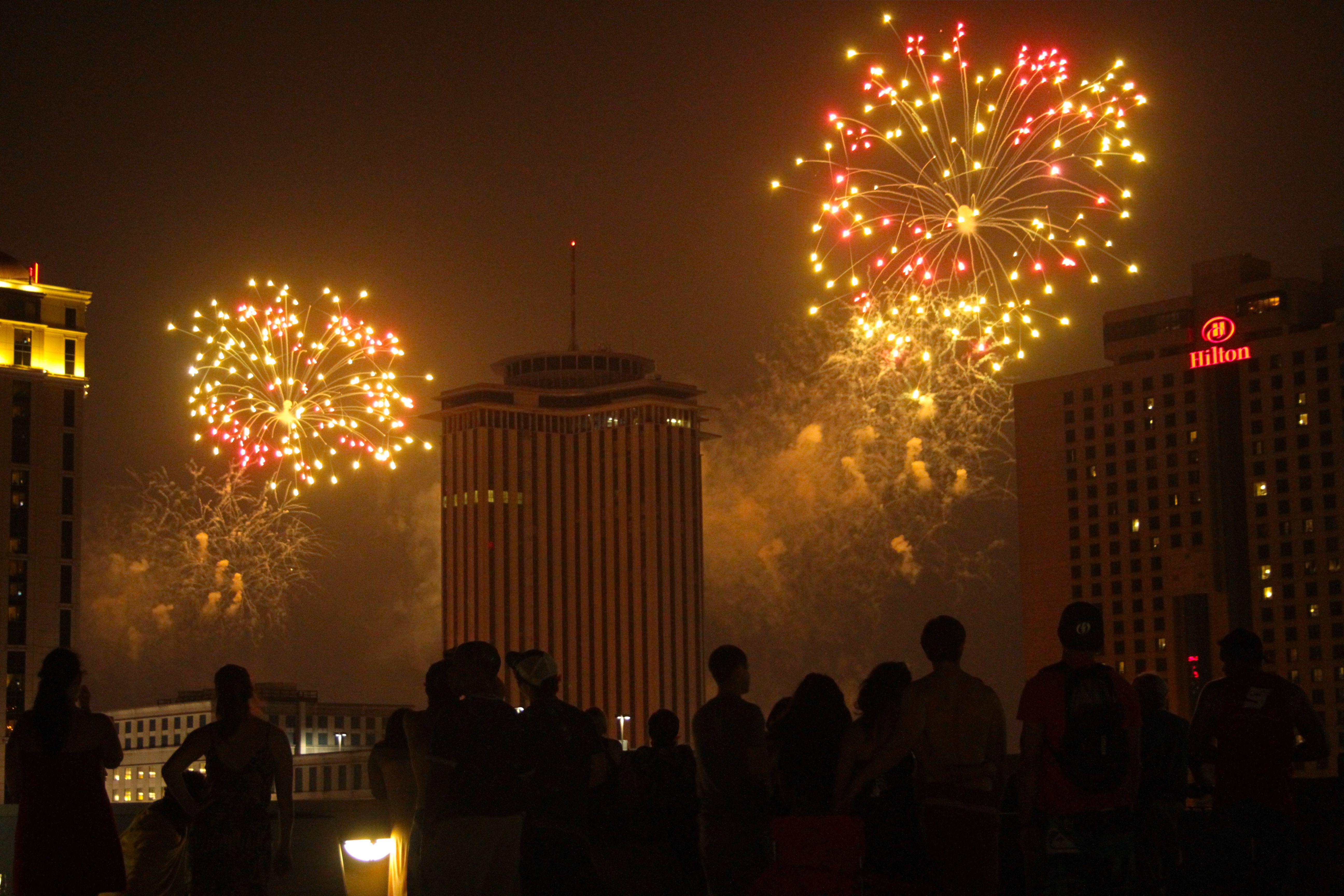
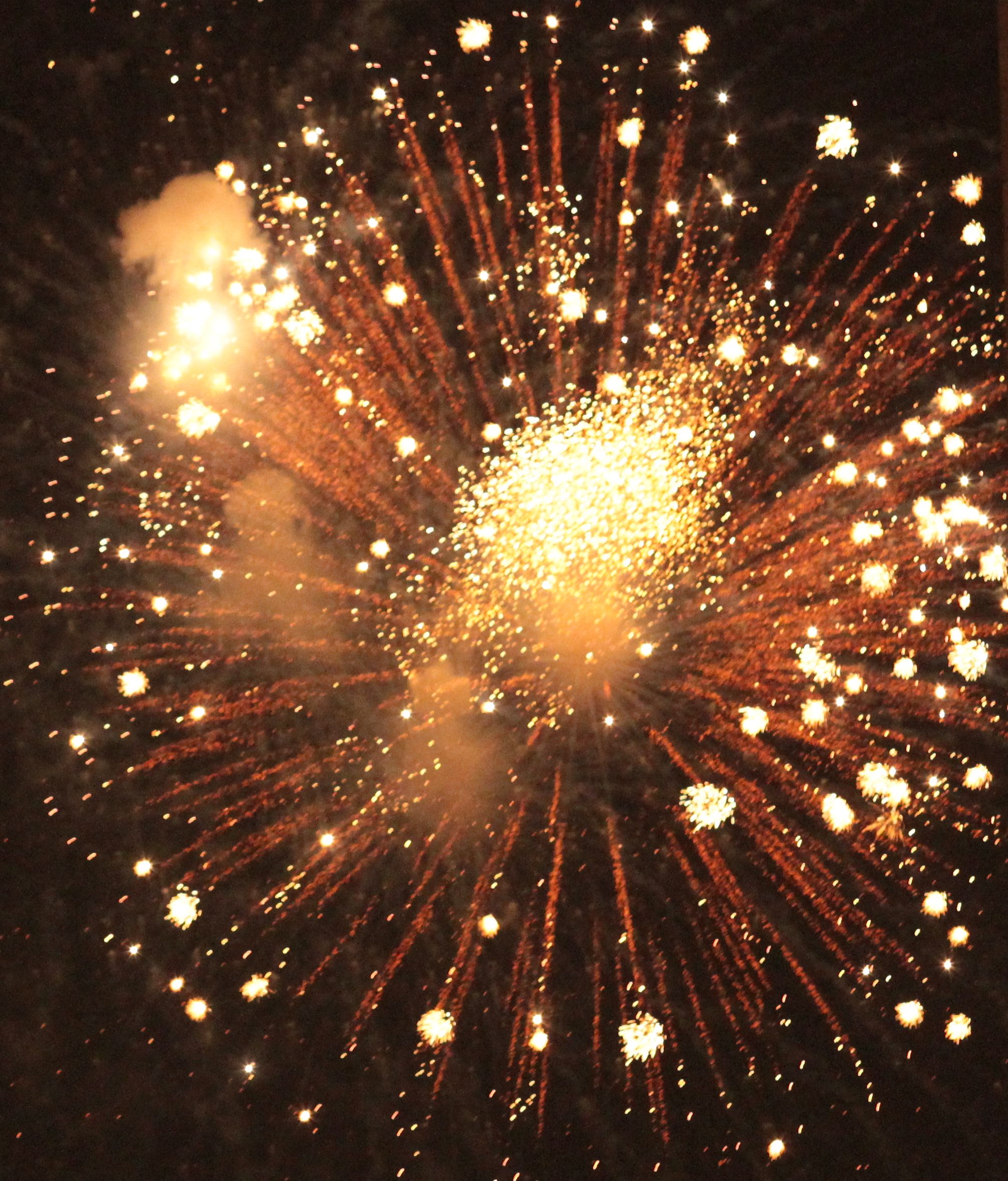
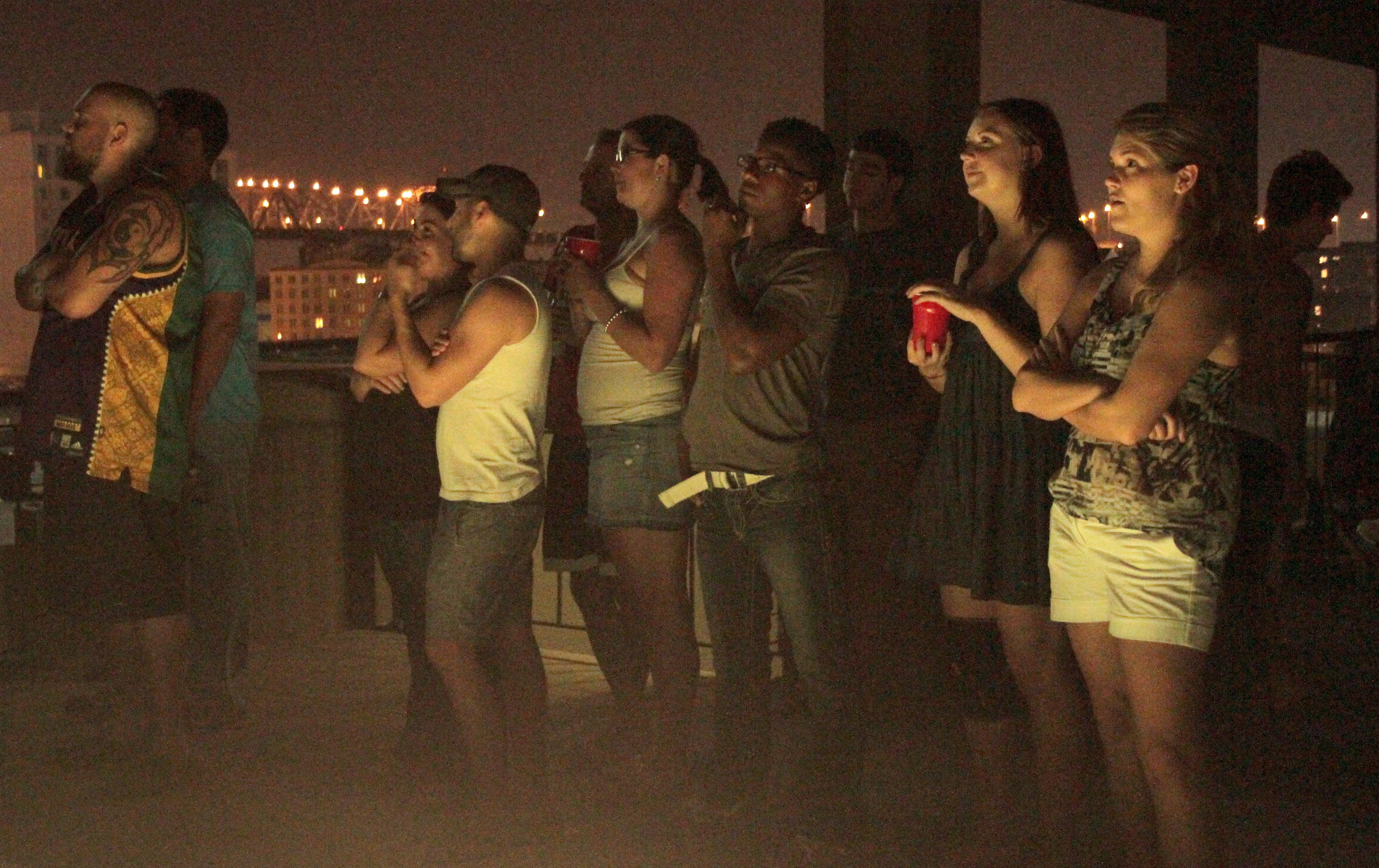
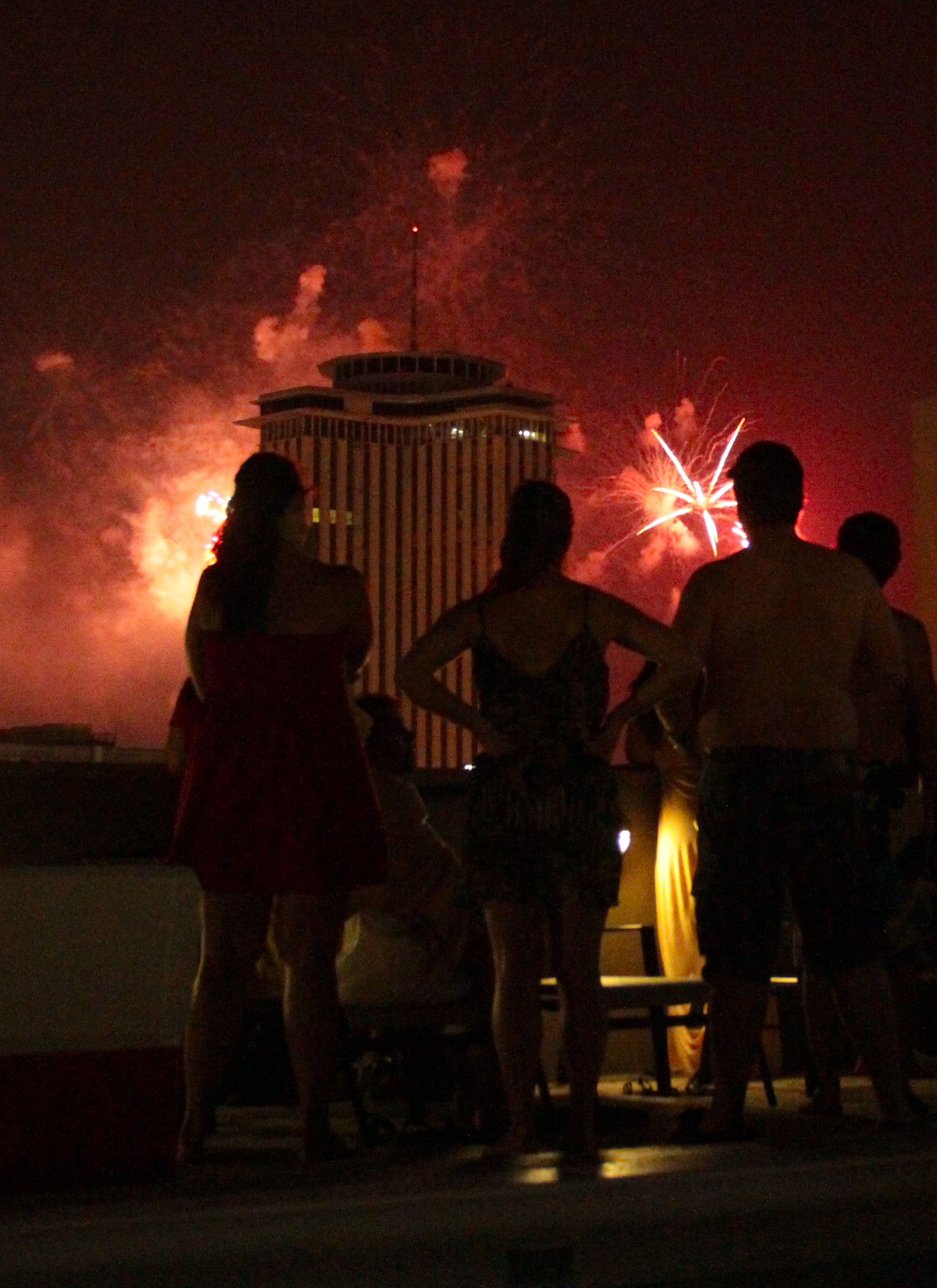
Fireworks are another subject matter that is very important to not blast with a flash- your entire subject is light, after all. In honor of one of my original purposes for this blog, I brought my good camera out to our 4th of July celebrations on our friends roof. I did not bring a flash with me.

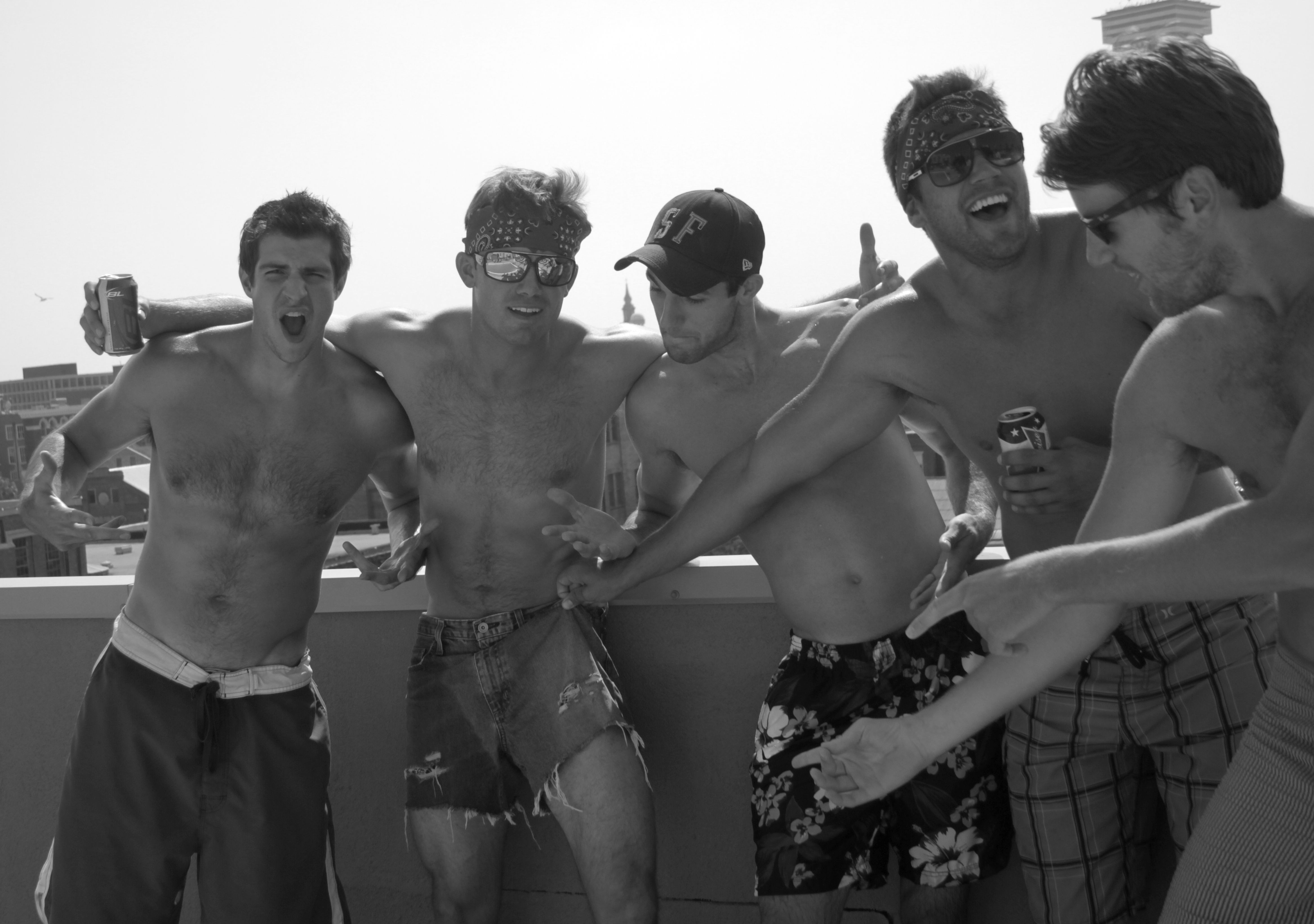
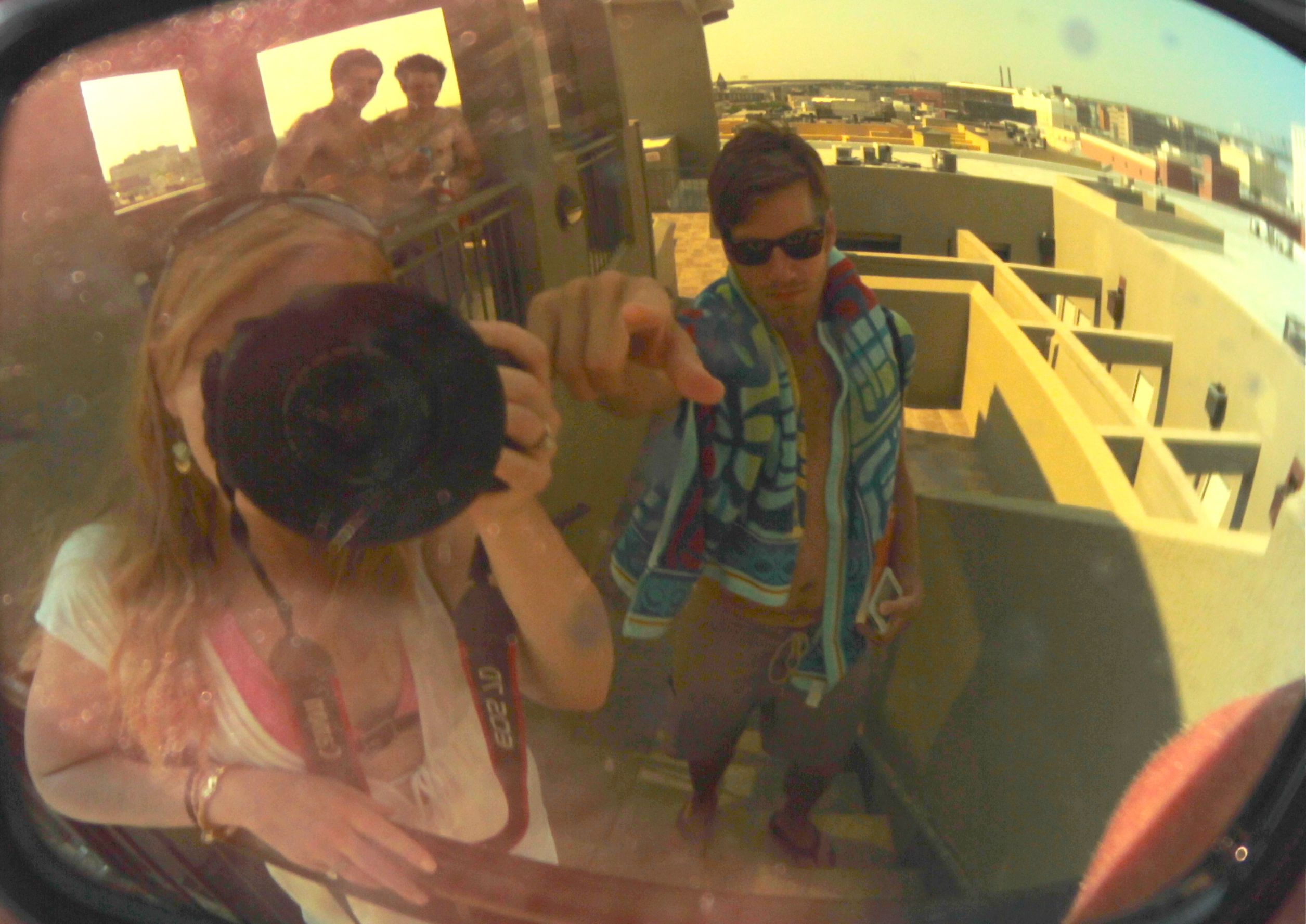
I liked the golden hue from the sunglasses in this photo even though it is a cliche idea. I also like the maze-looking shapes in the background.

And of course the fireworks are the crowning jewel of the holiday. I was a bit disappointed in my results, as I think I could have pushed myself to do something more interesting. Nonetheless, here are the results…

I really like the way this photographer captured fireworks in this old photo taken for the Longmont Times-Call, where I used to work, in 1979. I should have tried a time-release photo. Next year…

Happy Independence Day everyone.

It’s in the details…

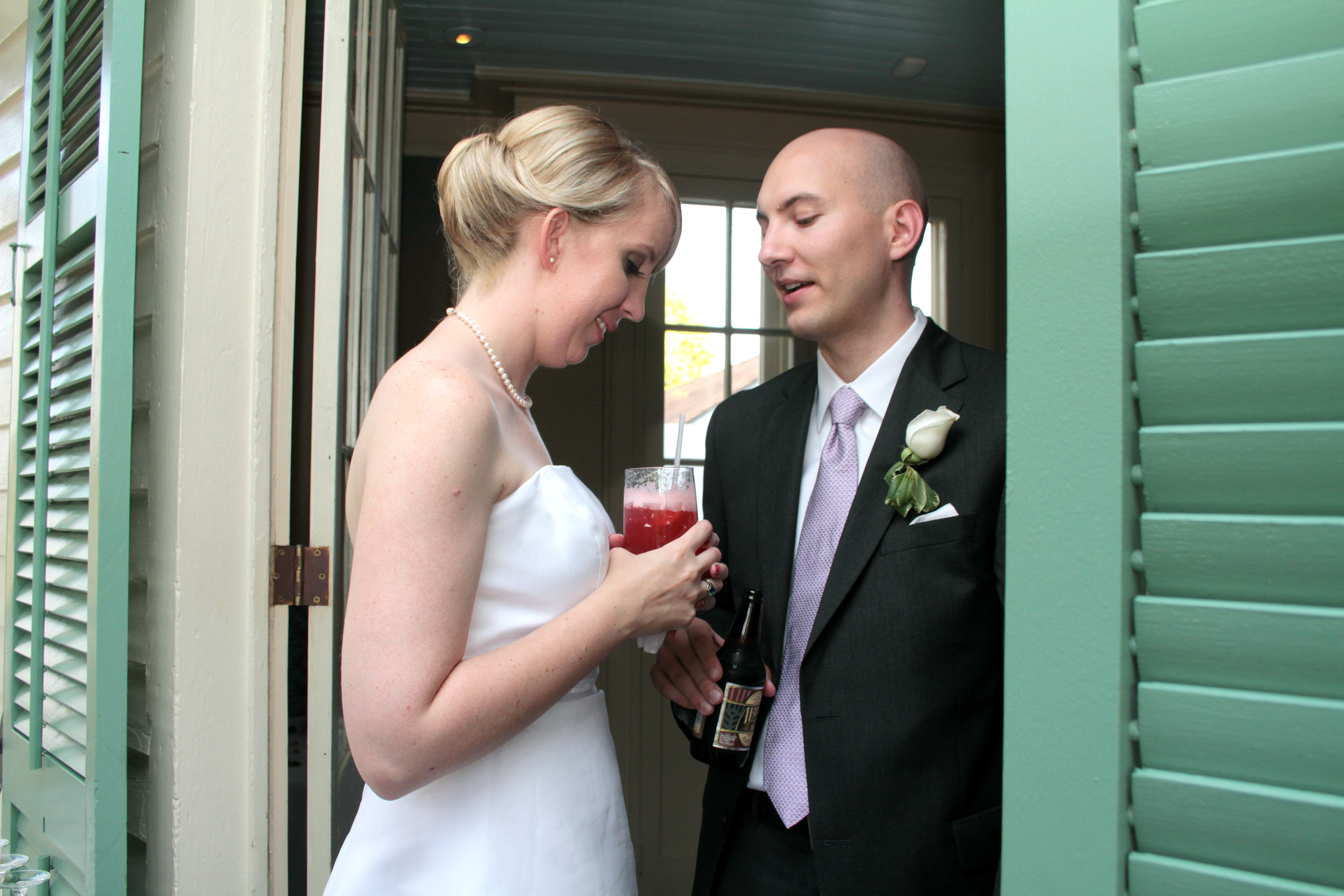
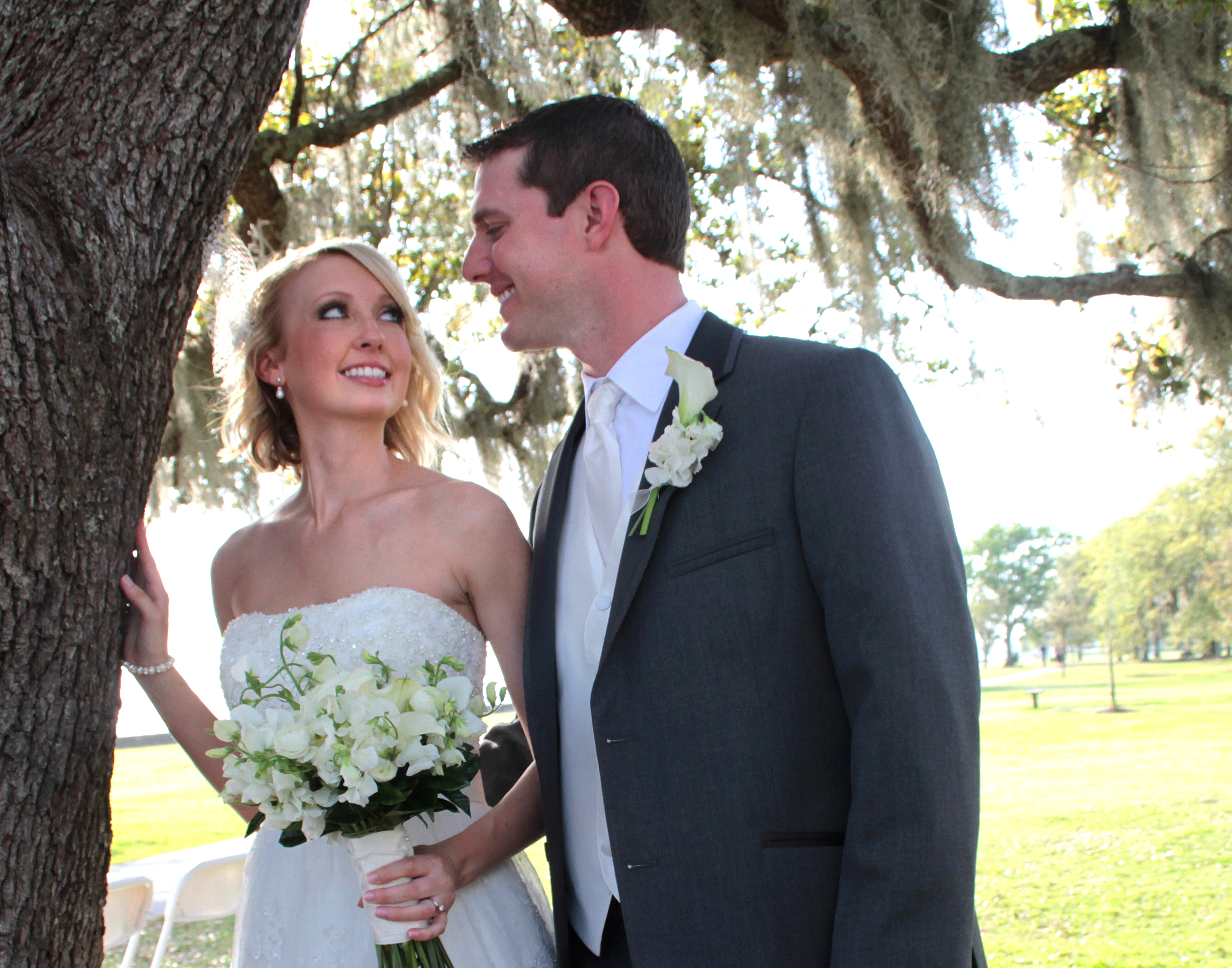
Weddings, like photographs, are all about the details that build up to that perfect moment- the decisive moment. 

It is about catching the natural, unexpected moments in a visually stimulating way.

I have been thinking about details related to my own wedding a lot lately, and going through the photos from weddings I have recently covered. It is hard for me to be so far away from my mom, sister, cousins and best friends as I plan this event with Evan, but I am lucky to have a fiance who is sharing the planning with me, and a soon to be mother-in-law who is always there for me and willing to help. It takes a lot of people to plan a beautiful and fun wedding and one of the most important things the day of the event is to be with all the people who are important to you and have helped to shape who you are. I know all the people in my life are helping in their own way. As a photographer, catching candid moments of families, friends and couples who truly love each other is one of the most rewarding images to solidify in time.

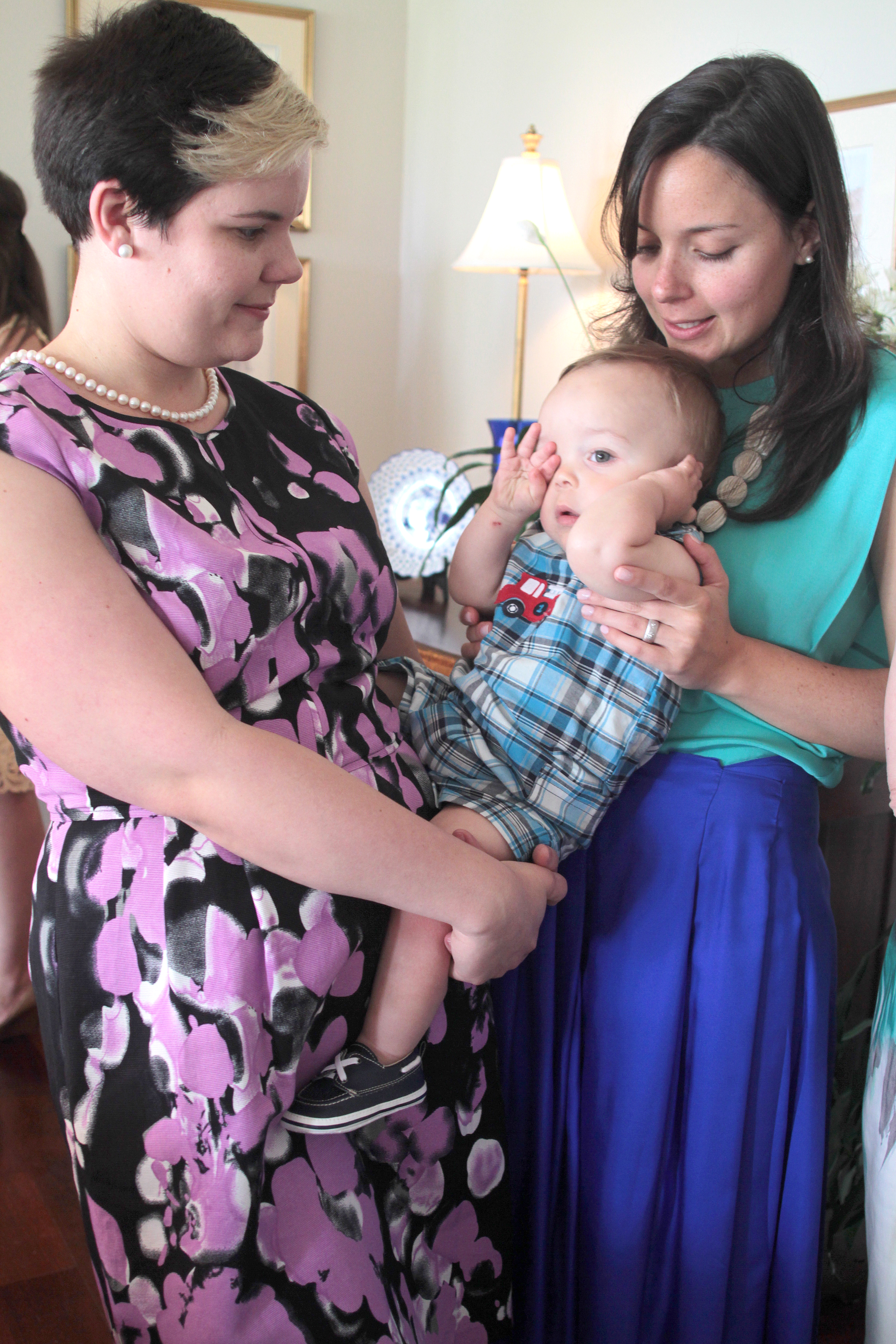
Evan's sisters Elise and Nicole with baby Benjamin

Melanie and Billy enjoy wedding cake flavored daiquiris on the way to the ceremony

Between portraits

Sharing a sisterly moment

Catching up with friends

Family

I have been accused by some friends of approaching my wedding as a photographer, thinking about what will look good in photos, rather than as a bride. For me, however, it is hard to separate the two. I will always look at the world through a photographer’s eyes.

When planning a wedding, there are many factors that must be considered…

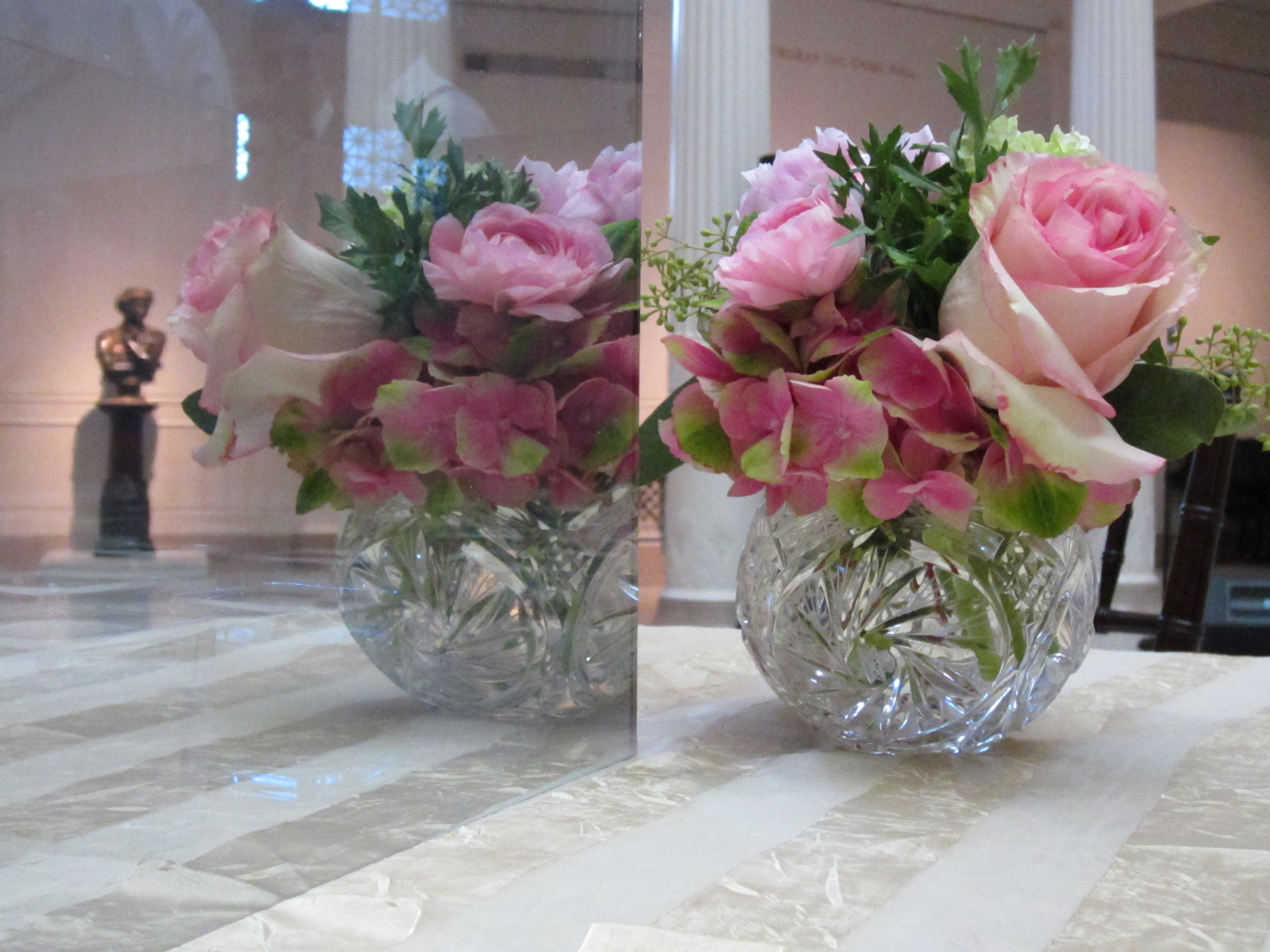
The flowers

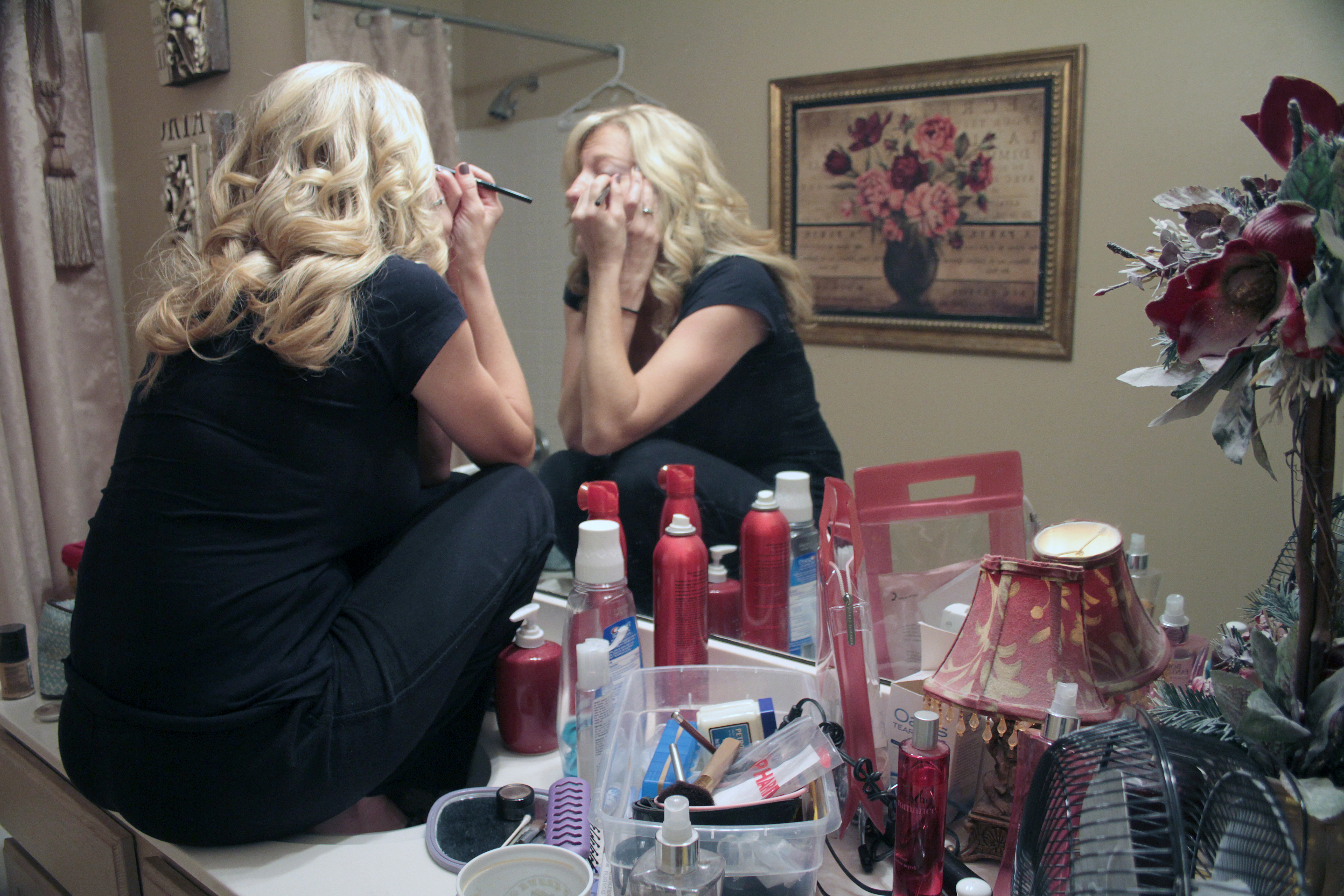
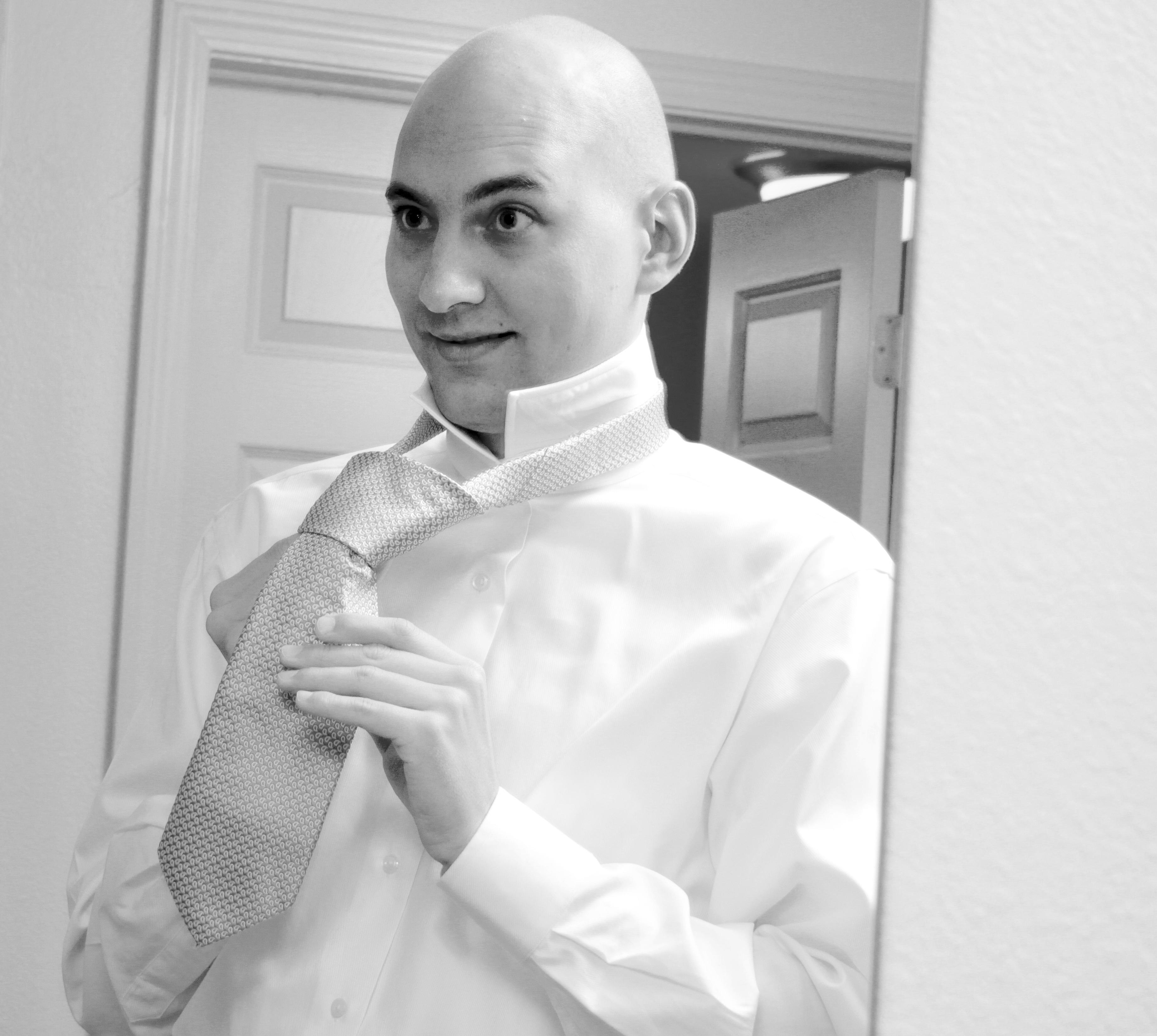
Where to get ready

Melanie's sister gets close to the mirror

John looks in the mirror at his hotel

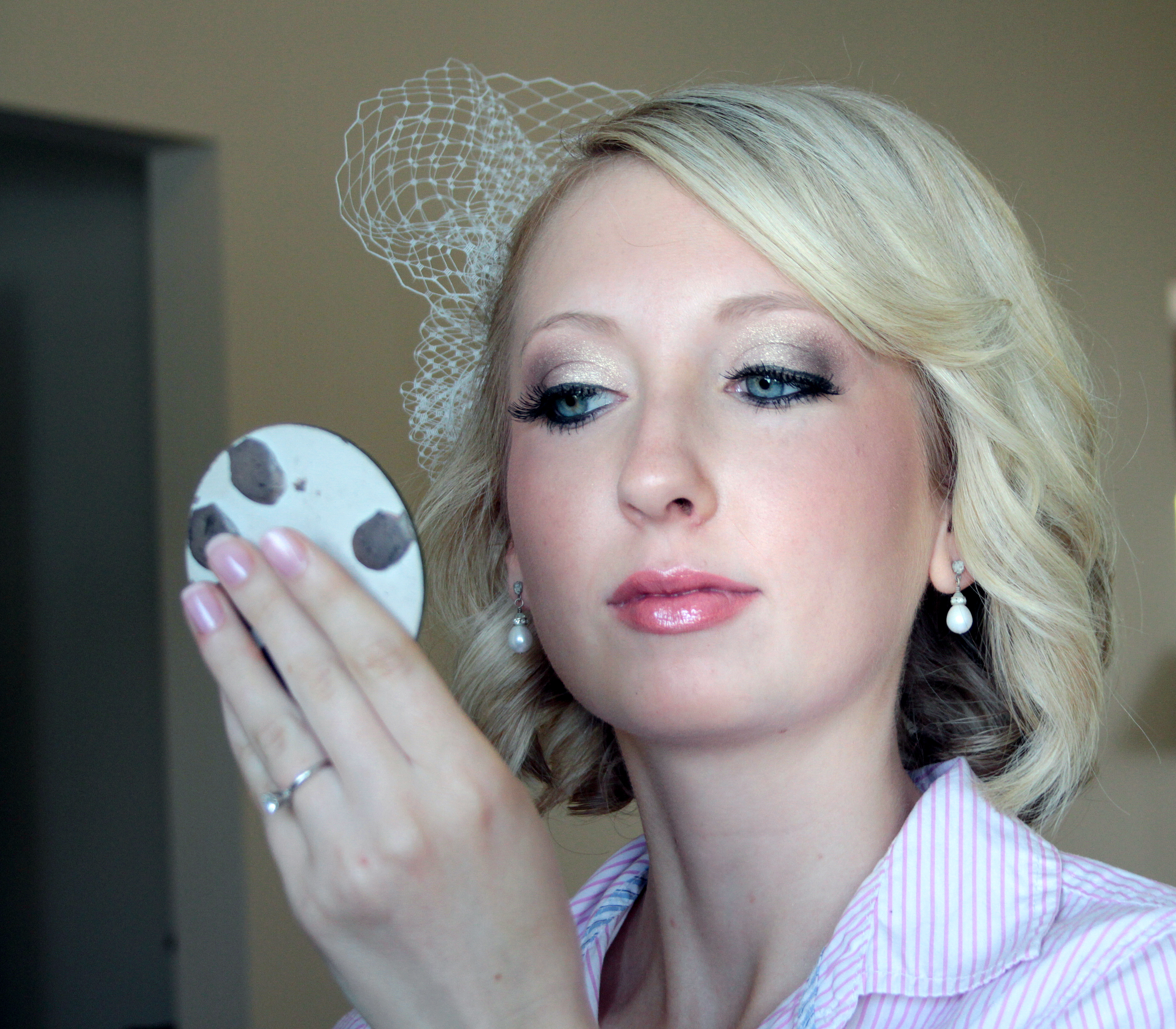
How to have your makeup done

Melanie checks out her newly applied makeup in a hand mirror

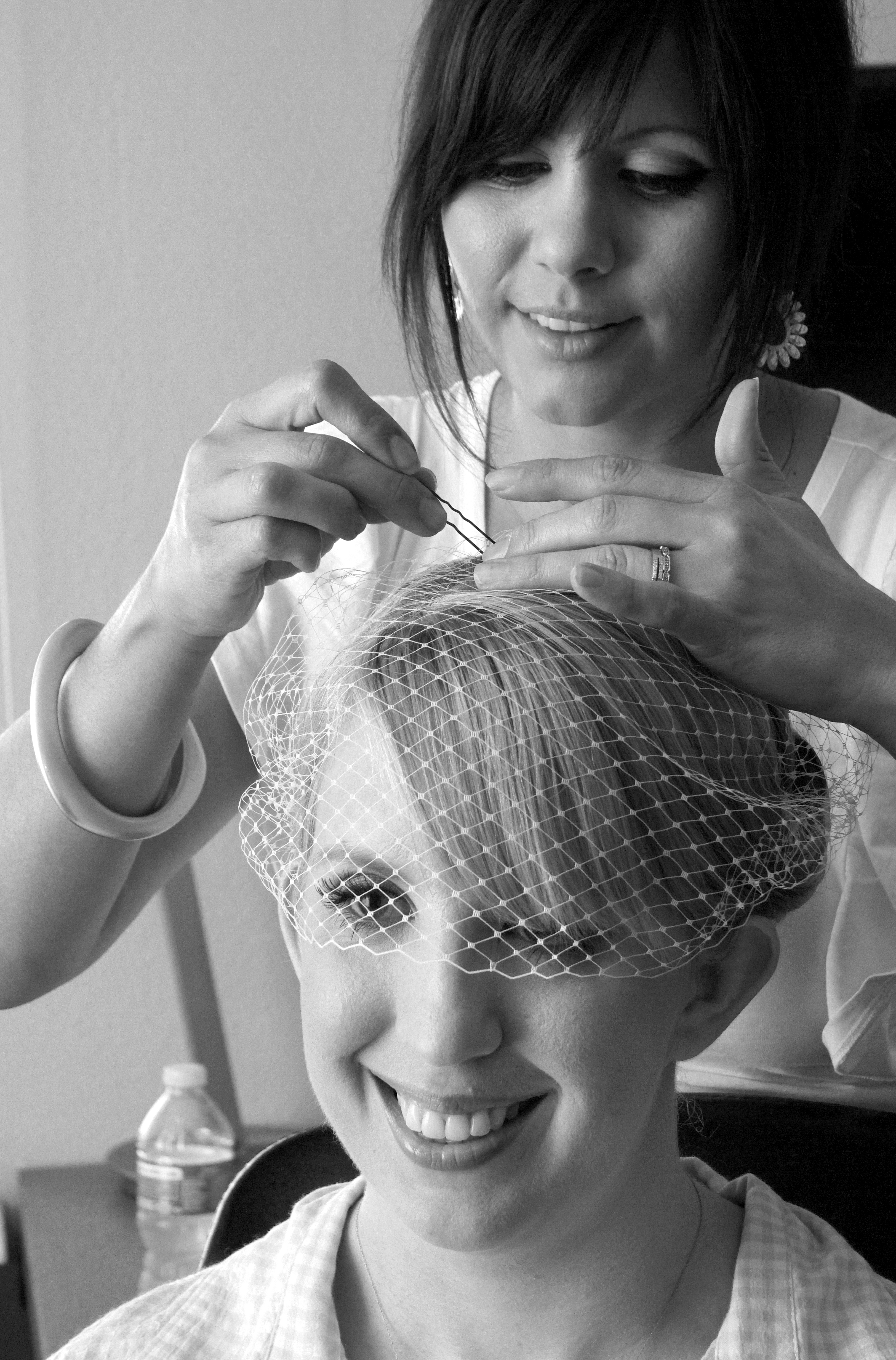
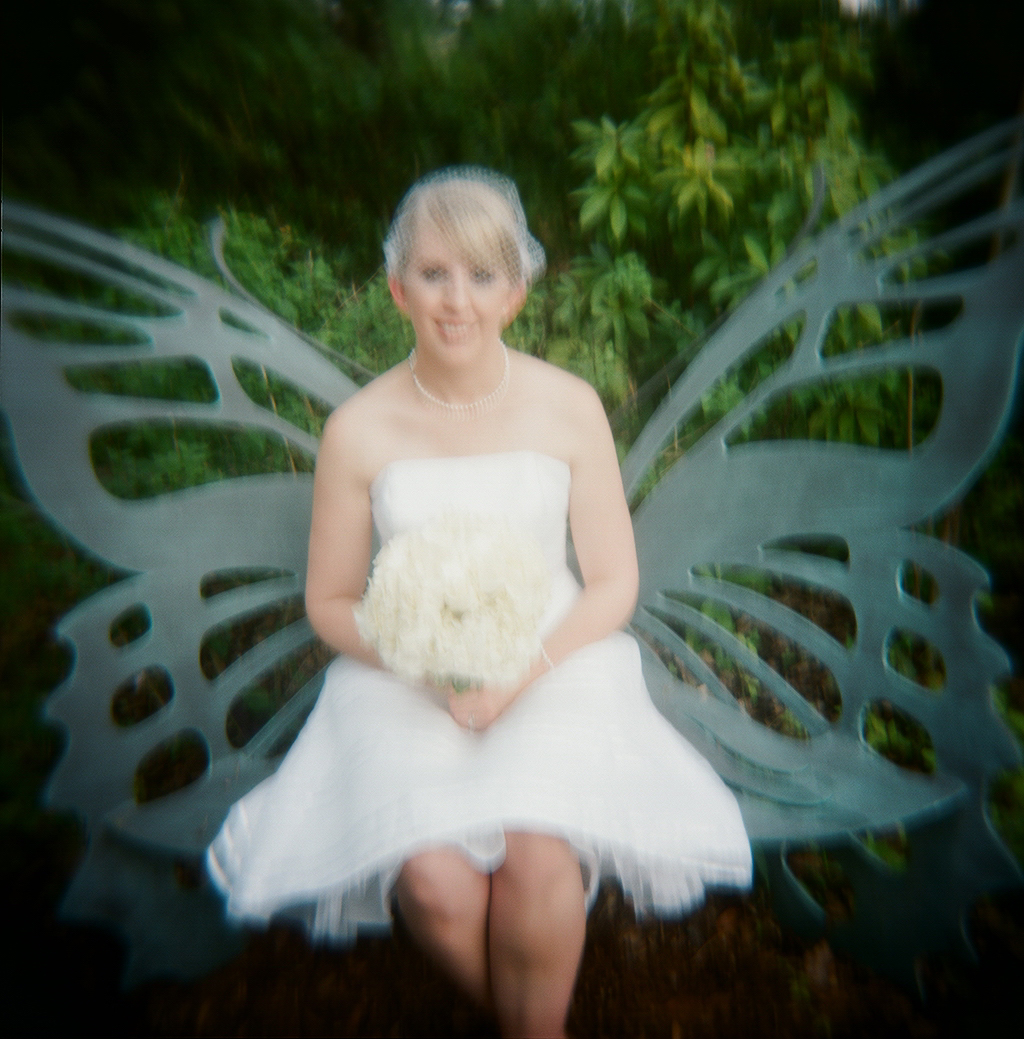
How to wear your hair and whether to wear a veil

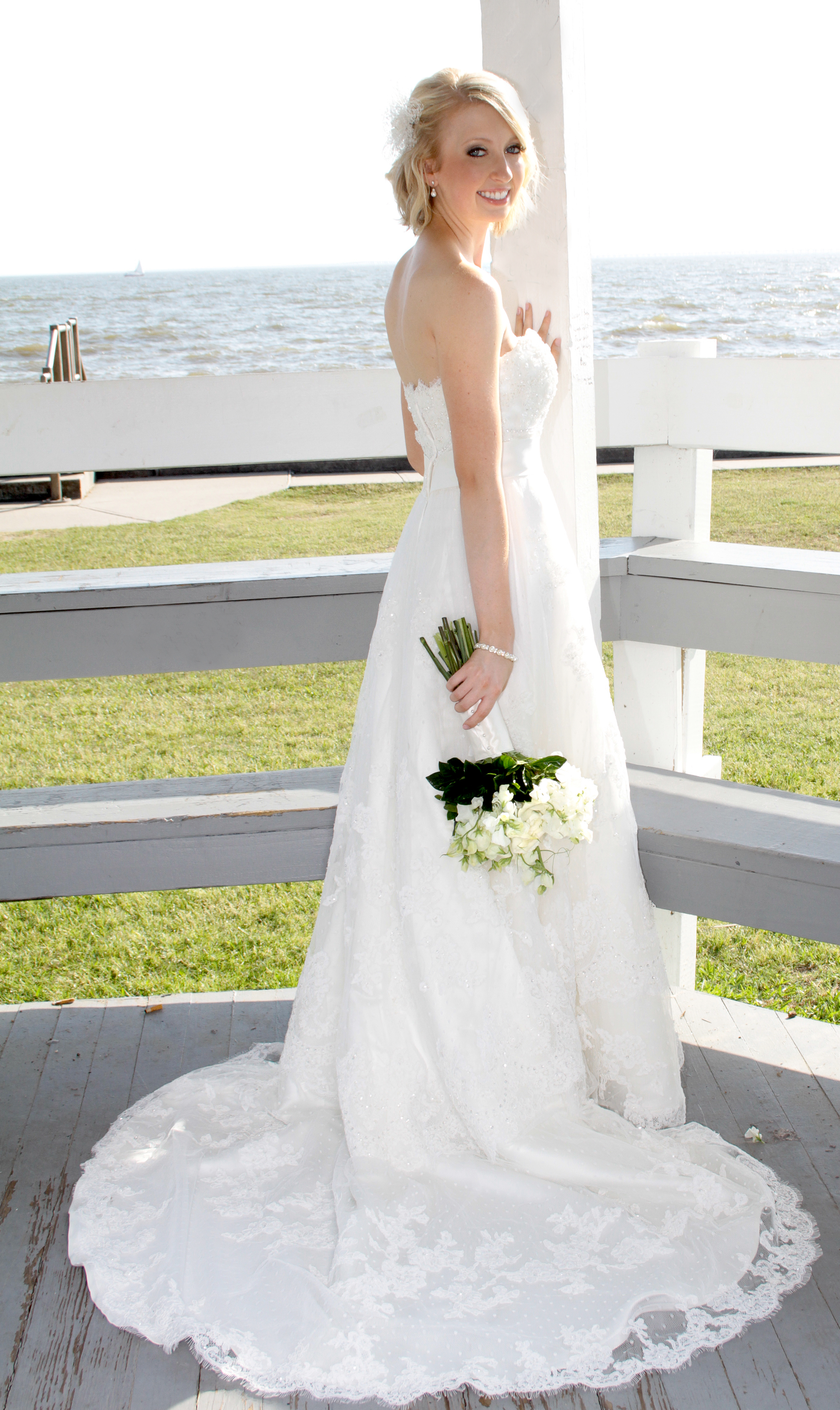
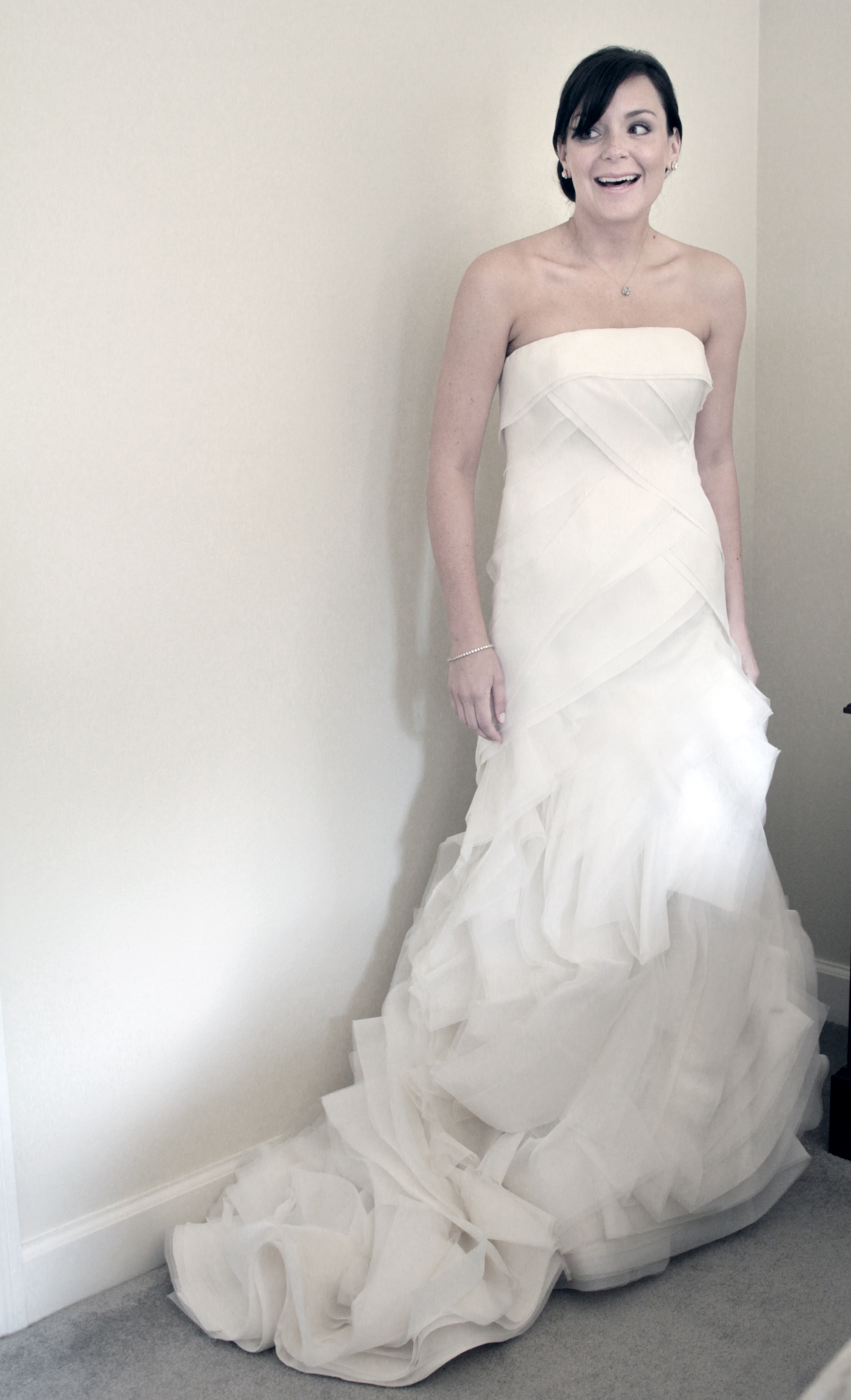
What dress to wear

Melanie

Nicole (Evan's sister)

Anna

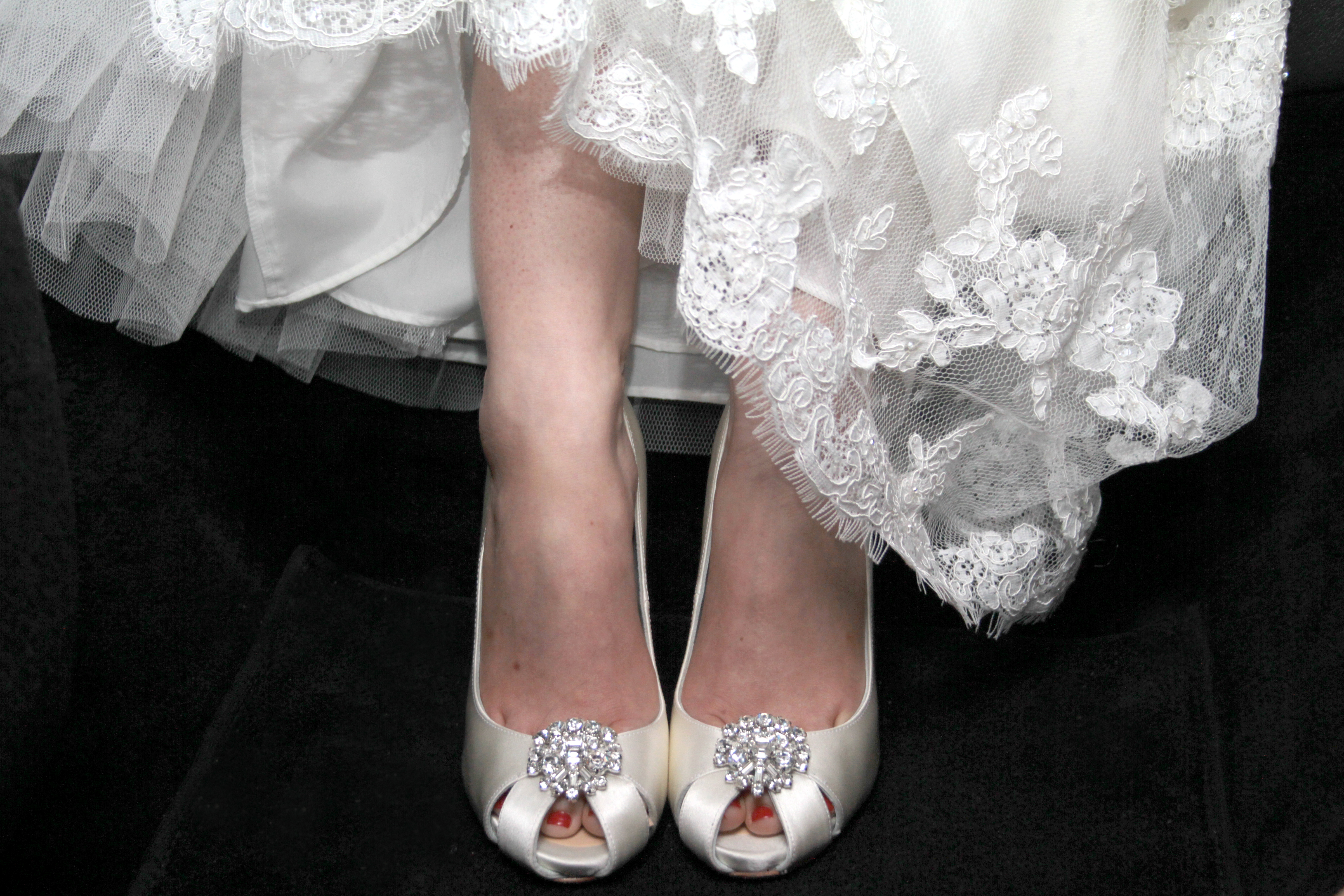
What shoes

Melanie's shoes peaking out from under her dress

Earrings?

Easy as 1, 2, 3

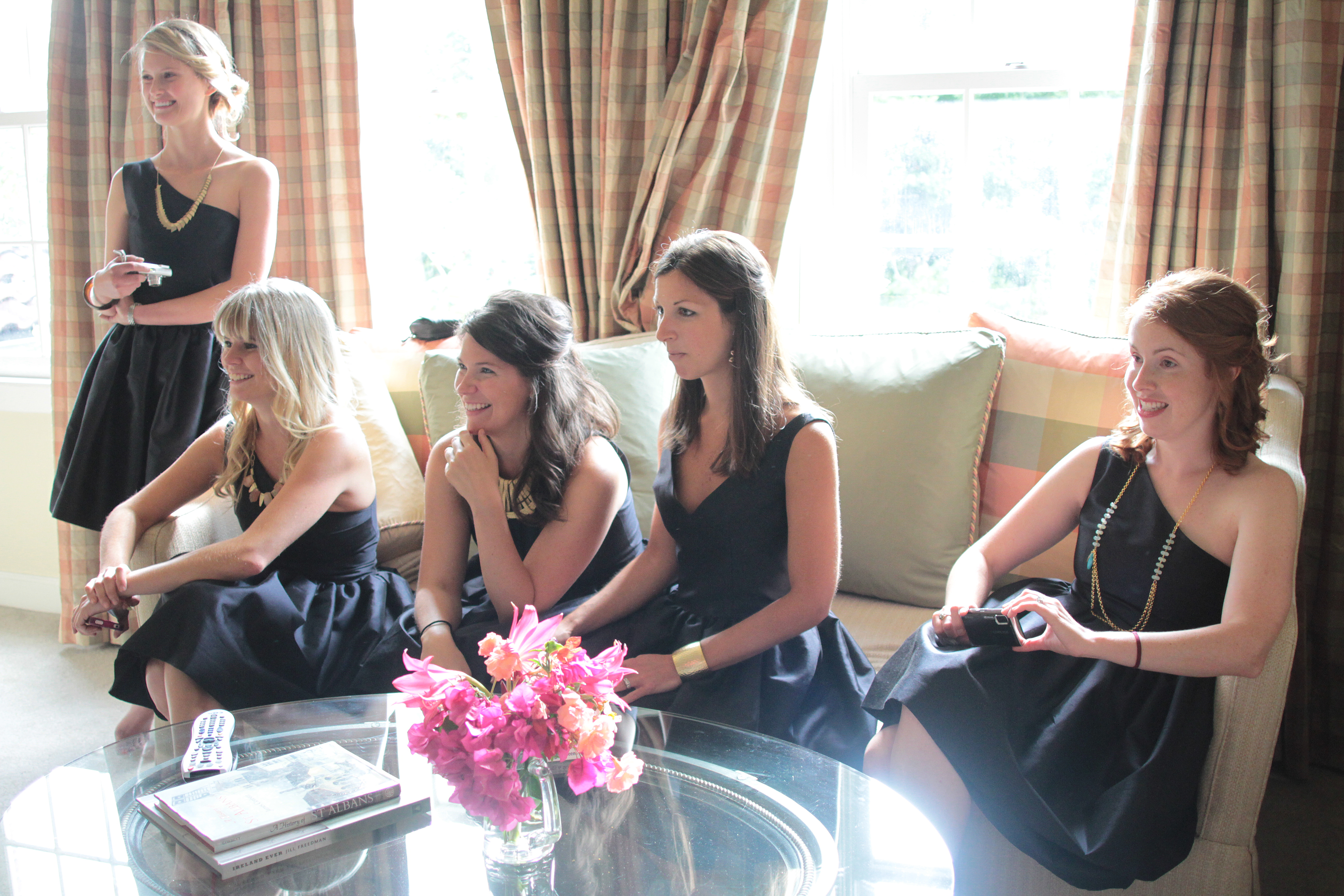
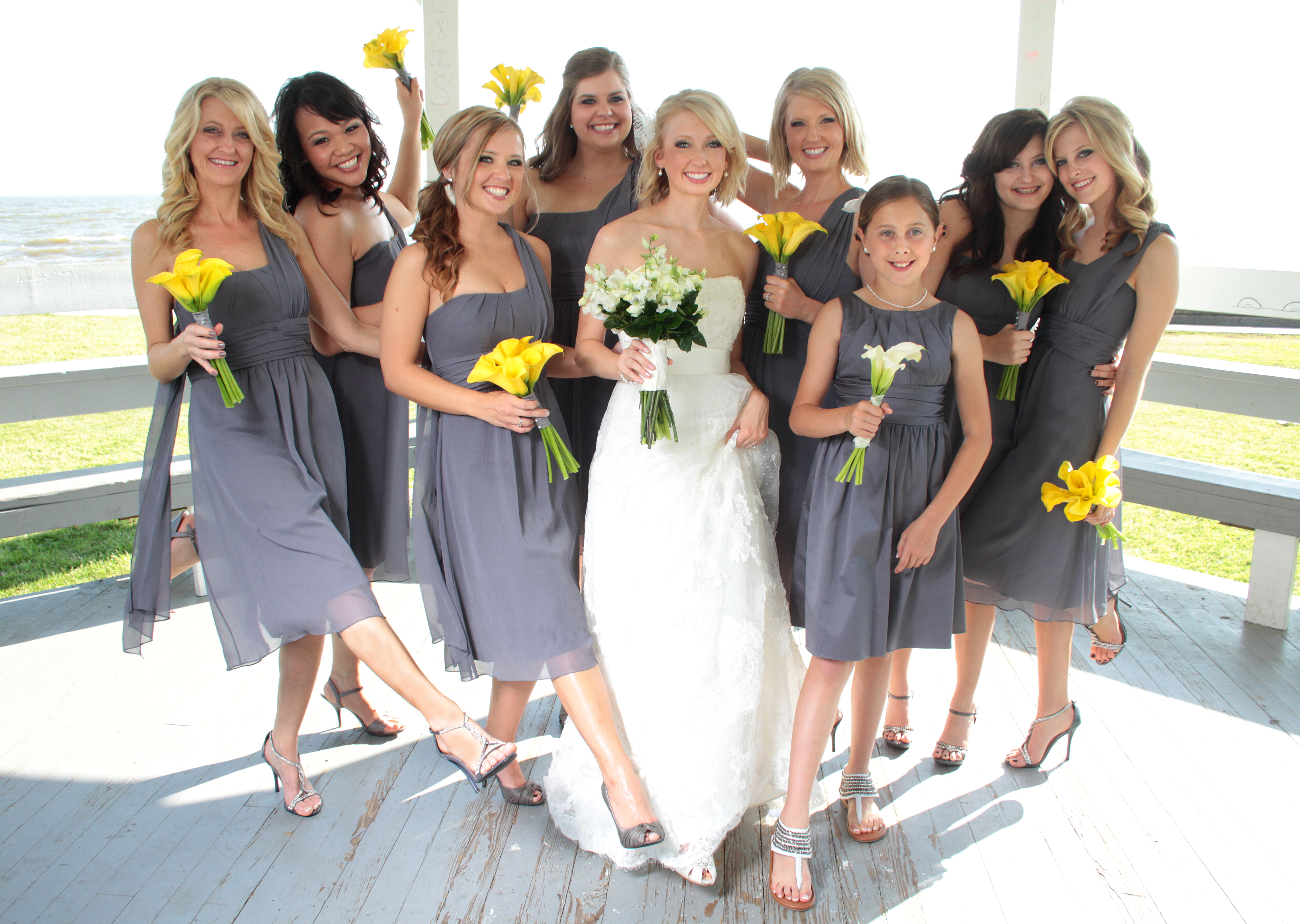
What should the bridesmaids wear?

Nicole's bridesmaids watch her get ready

Melanie has some fun with her bridesmaids

Fun with the ladies before the ceremony

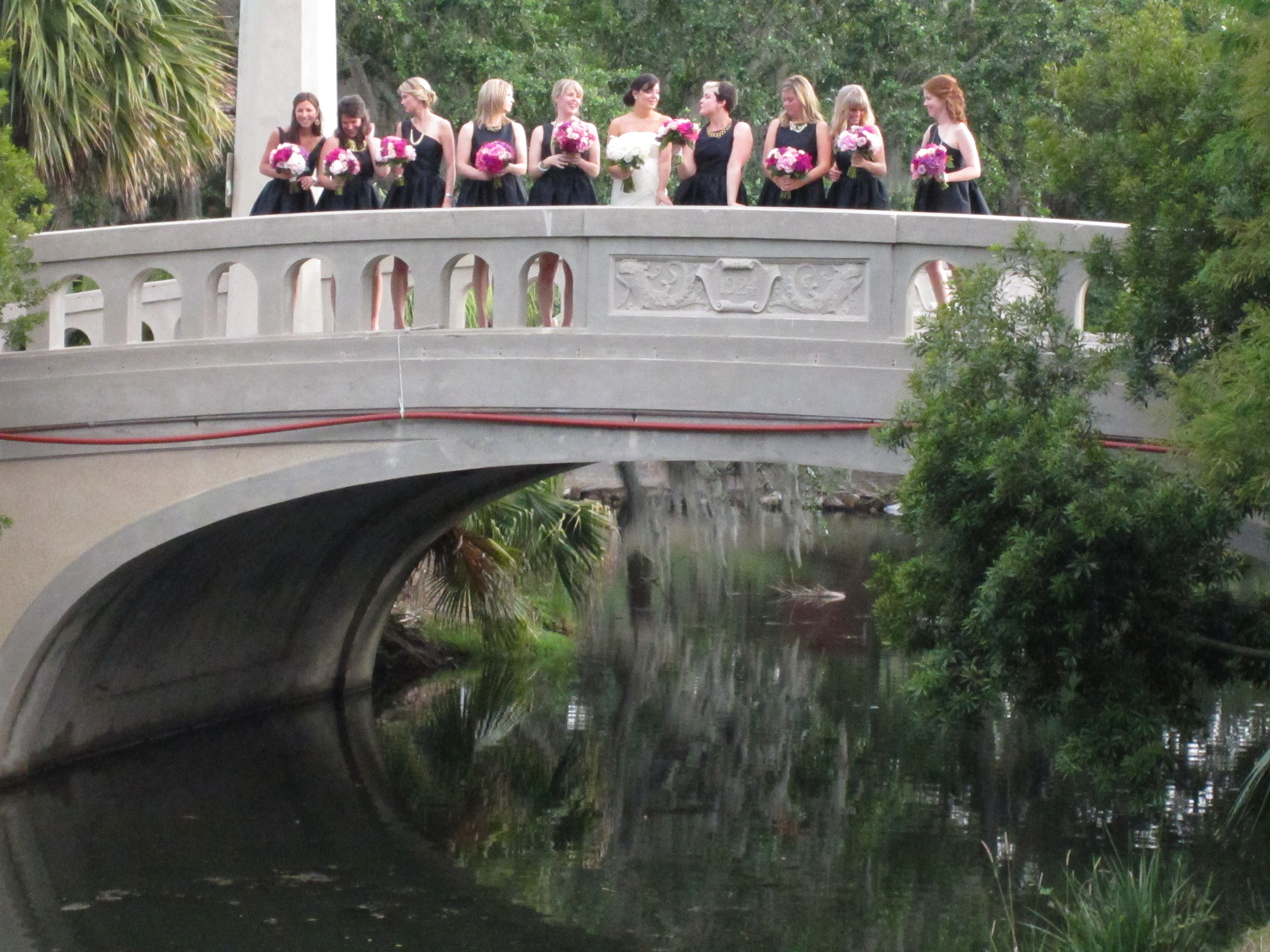
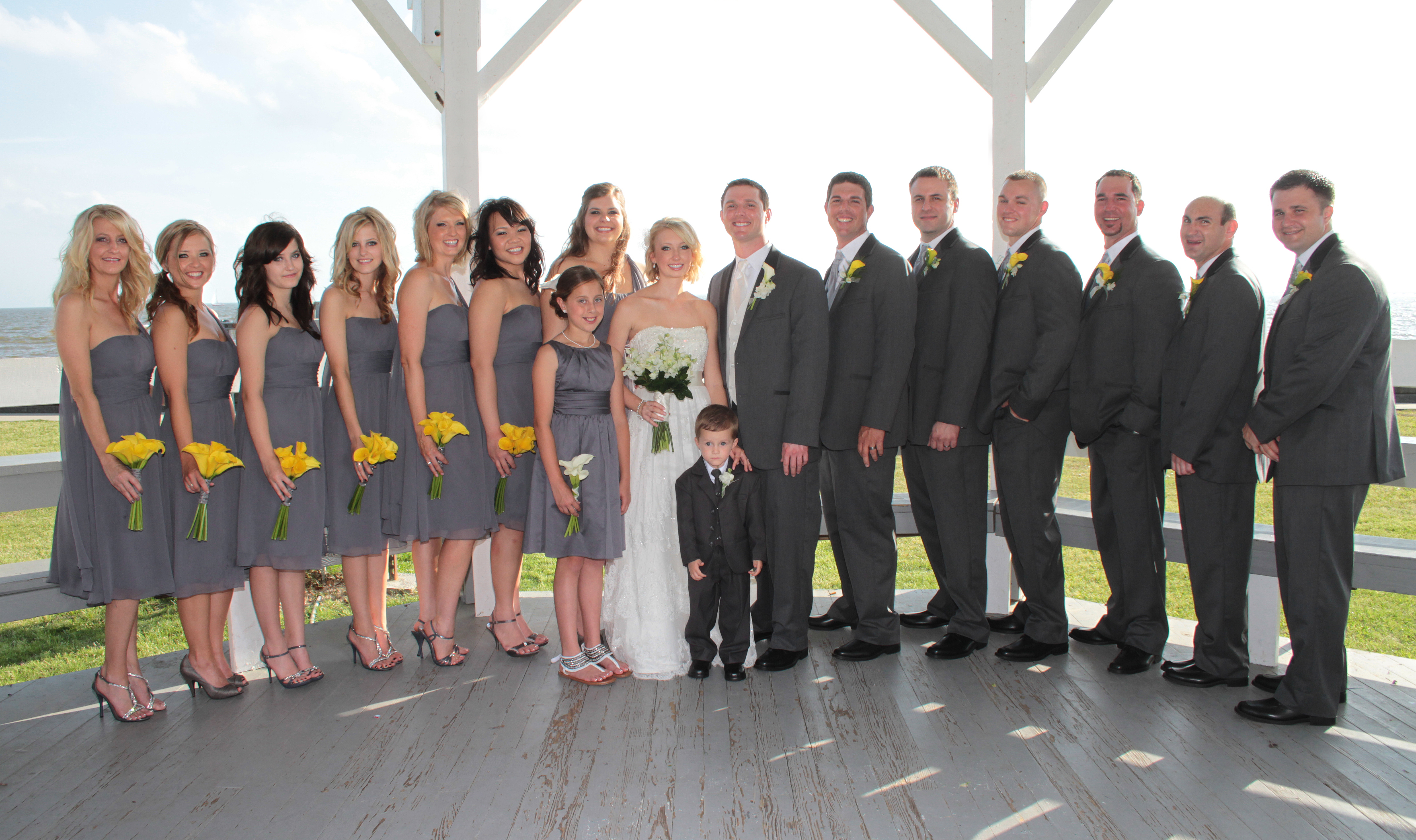
How big to have your wedding party

The wedding party

The groomsmen jump

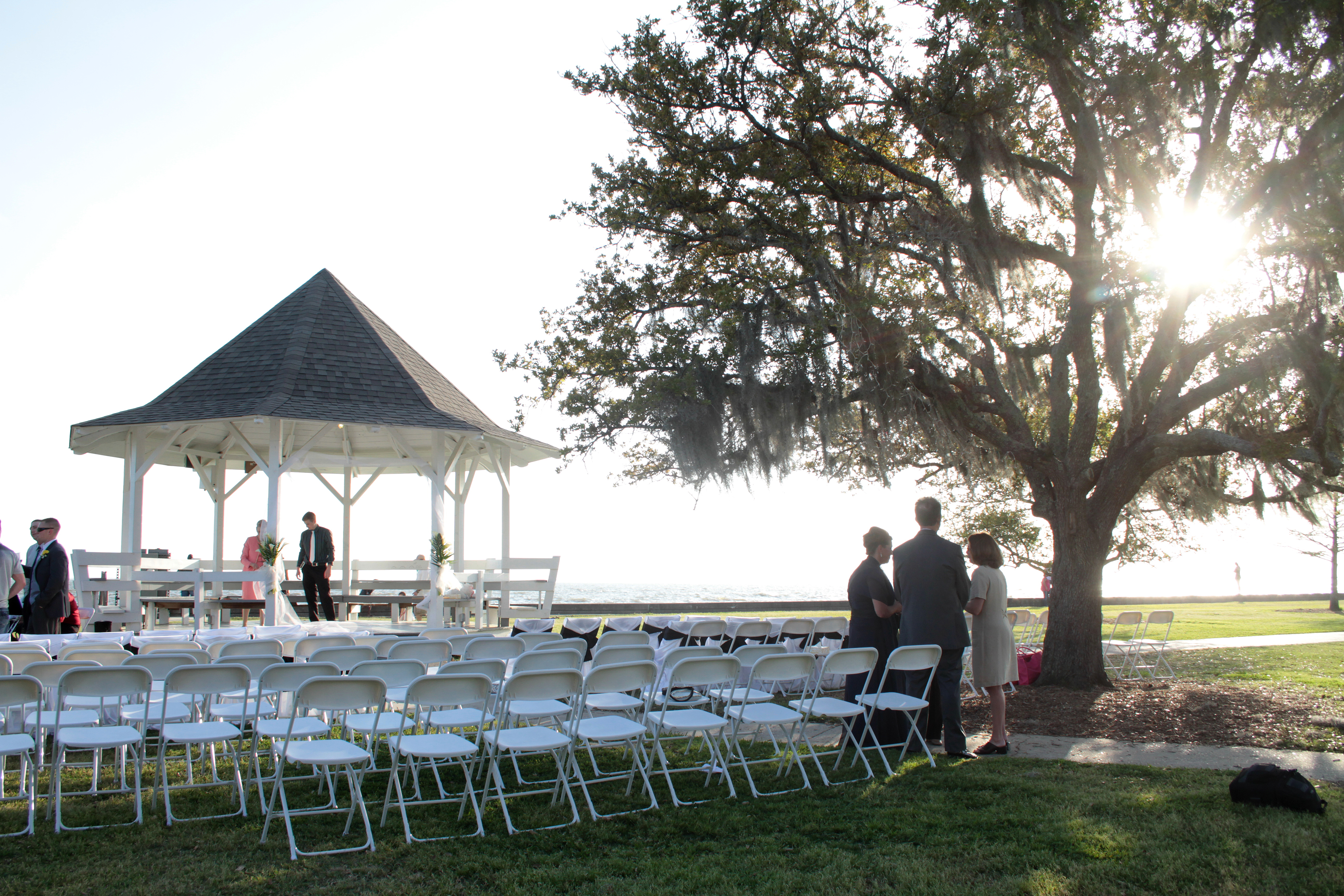
Where to hold the ceremony

The Lakefront

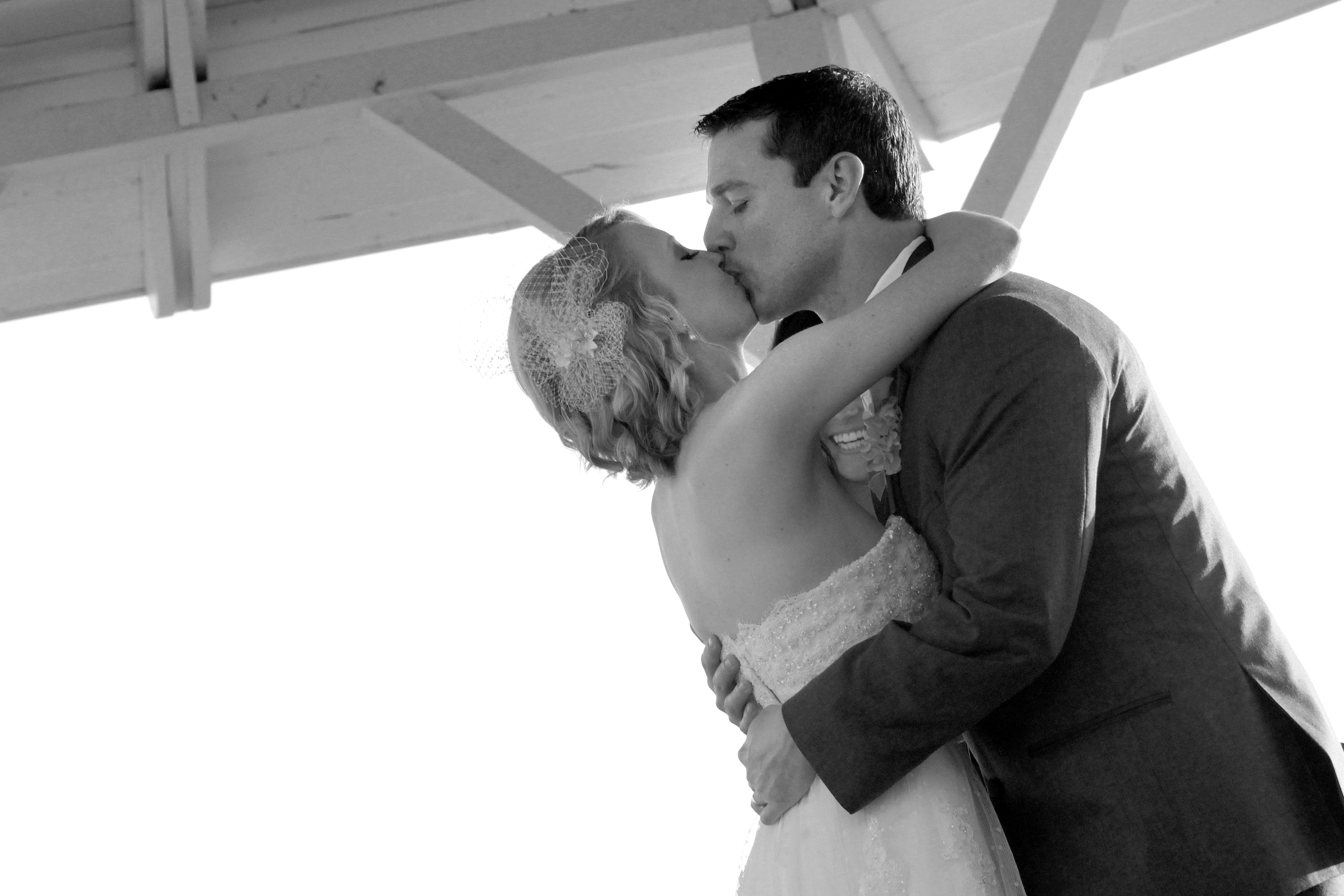
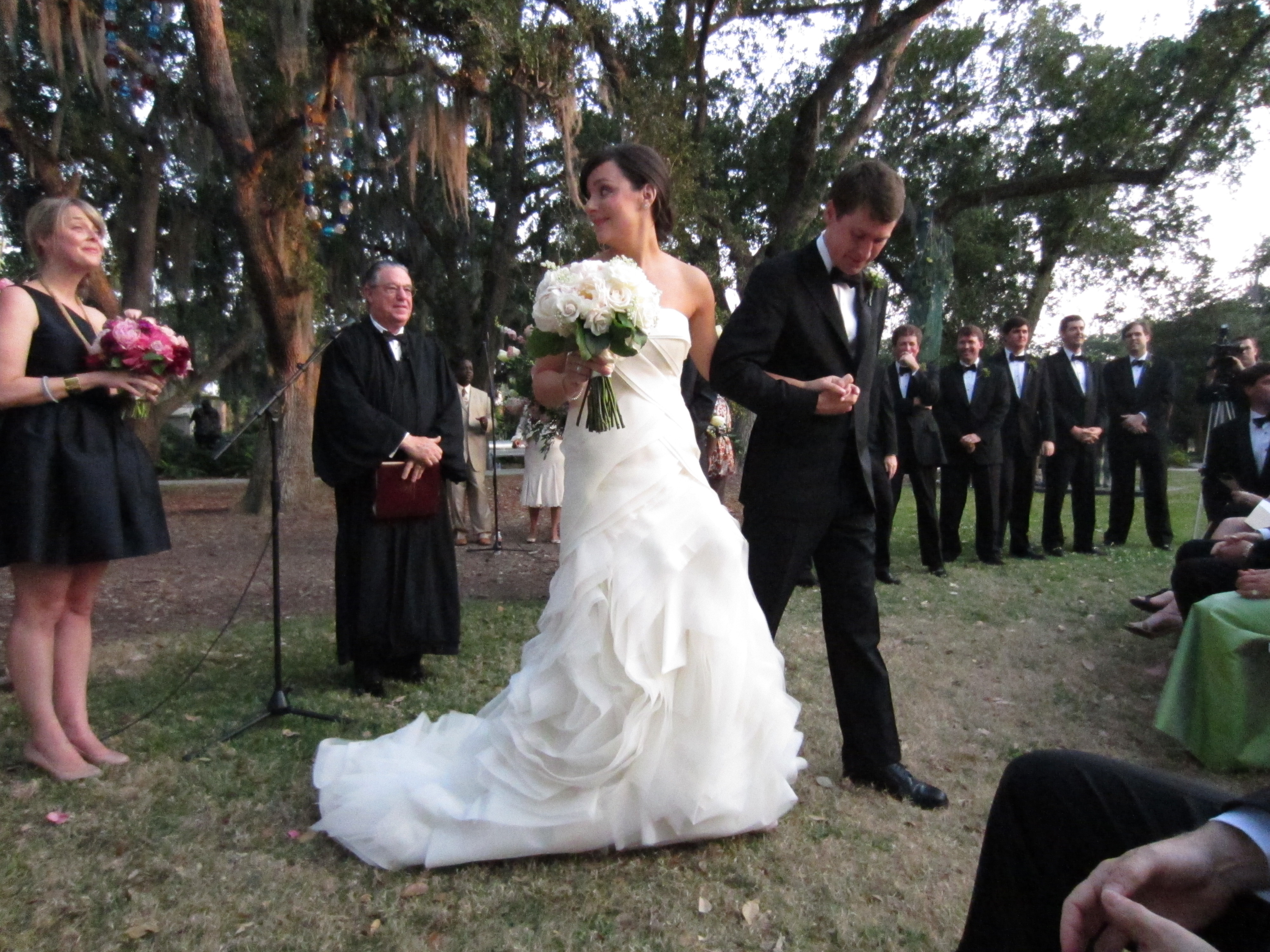
Sealing the deal

What type of reception to have…

Big

Center of attention

A small dance partner

or small

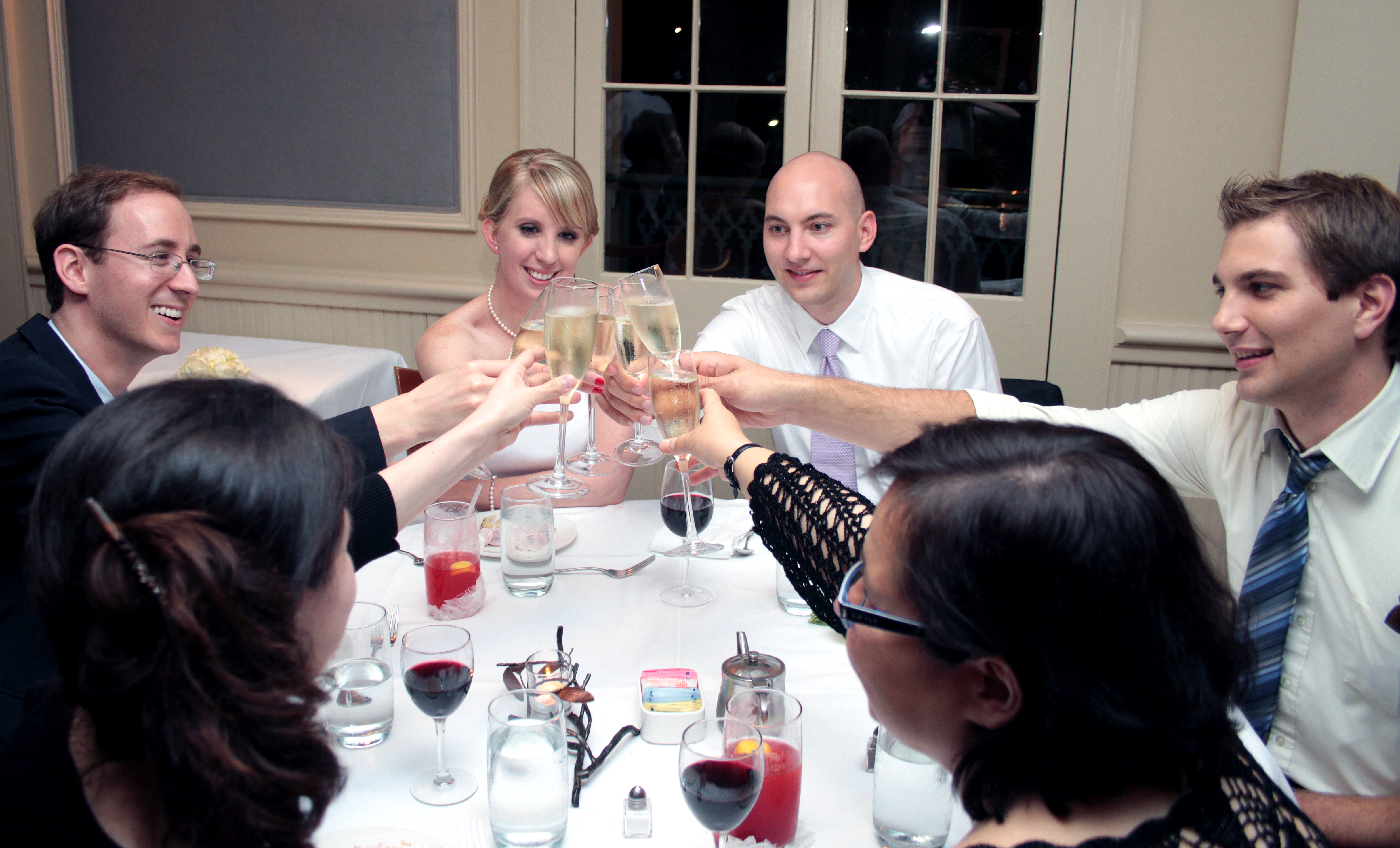
Cheers!

Laughs

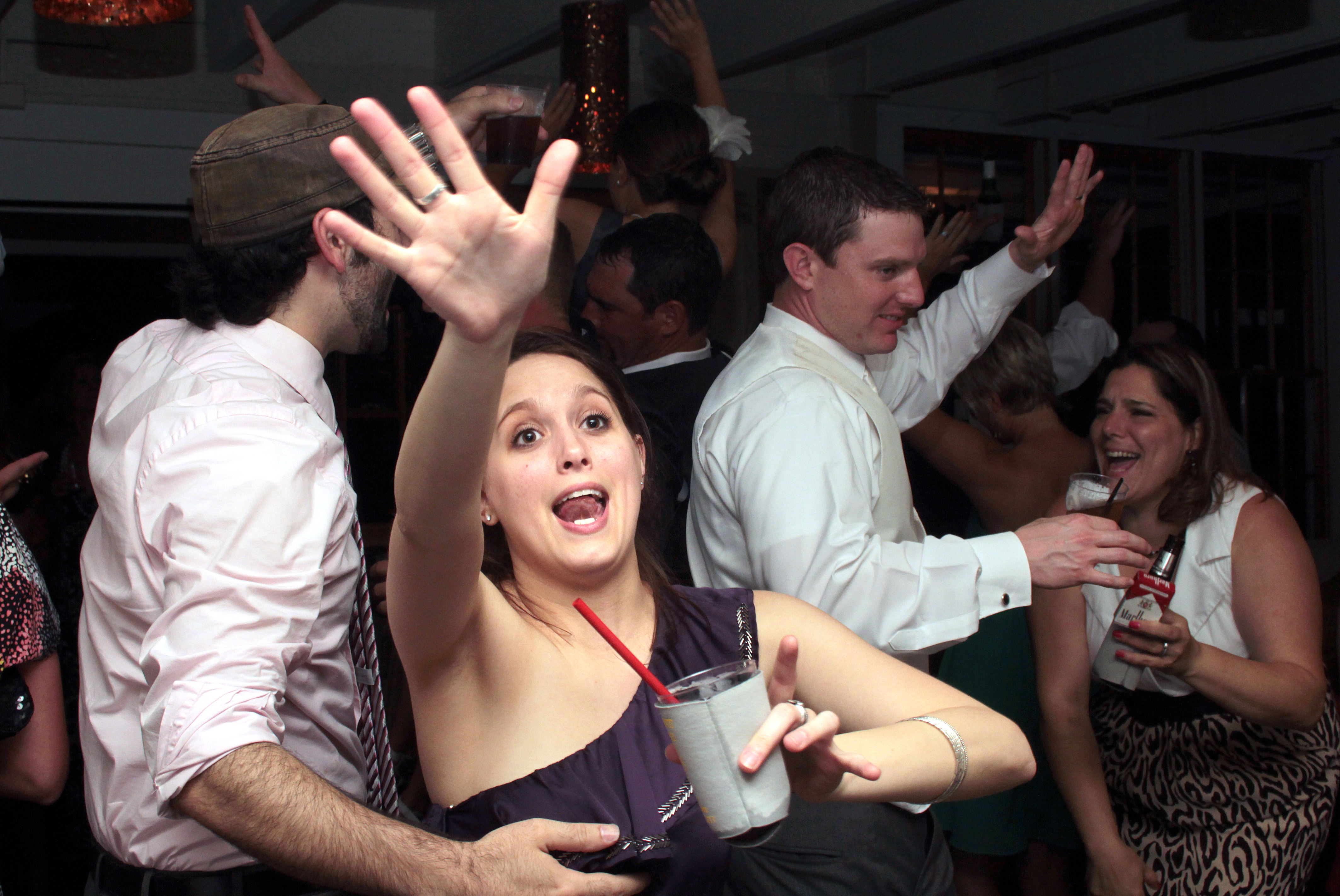
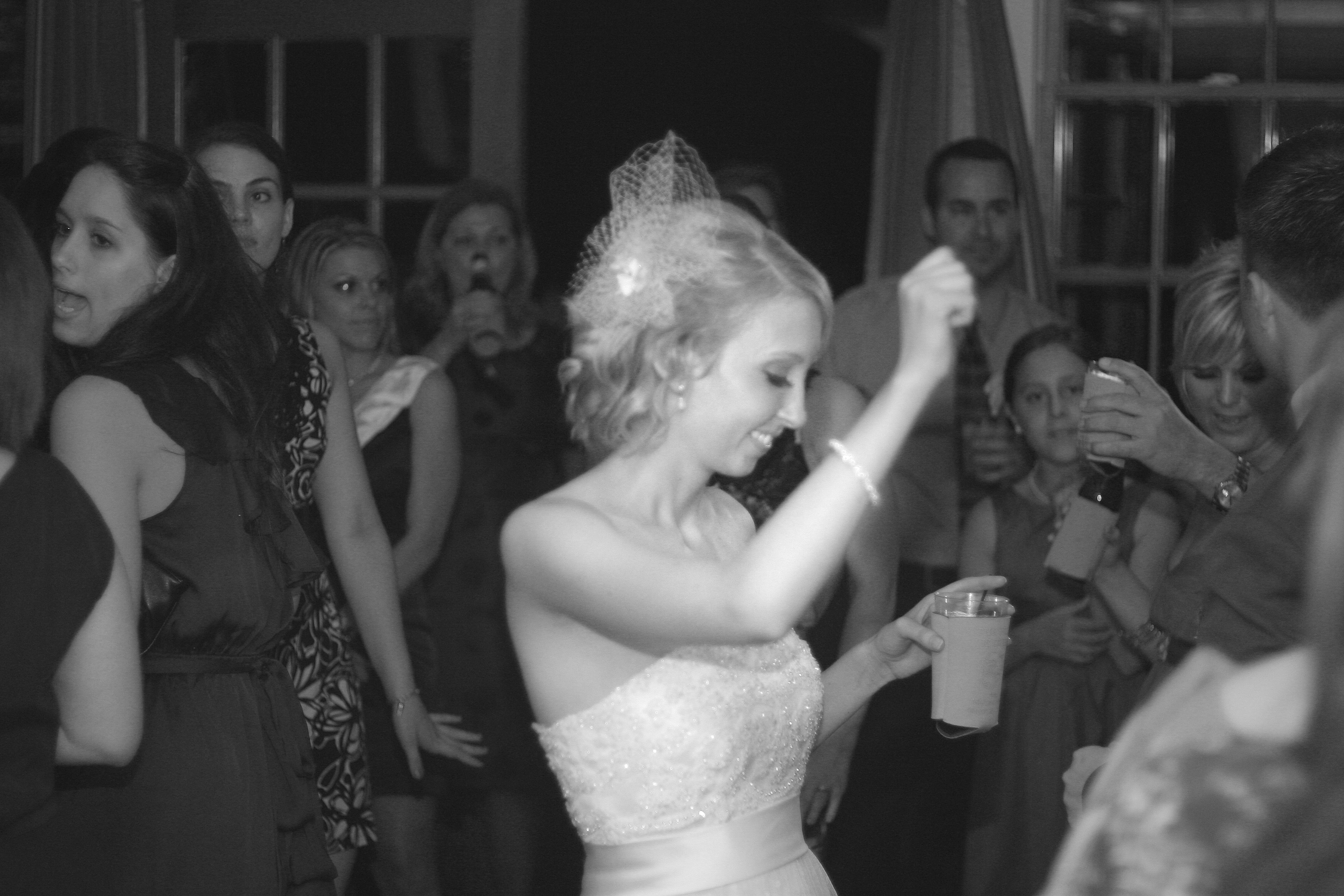
Shall there be dancing?

The first dance

Color blur

Celebrate!

Sweet moments

Captured in time

Standing out like a star

The music

Setting the tone

Whether there will be a second line or a crawfish boil (these are New Orleans concerns)…

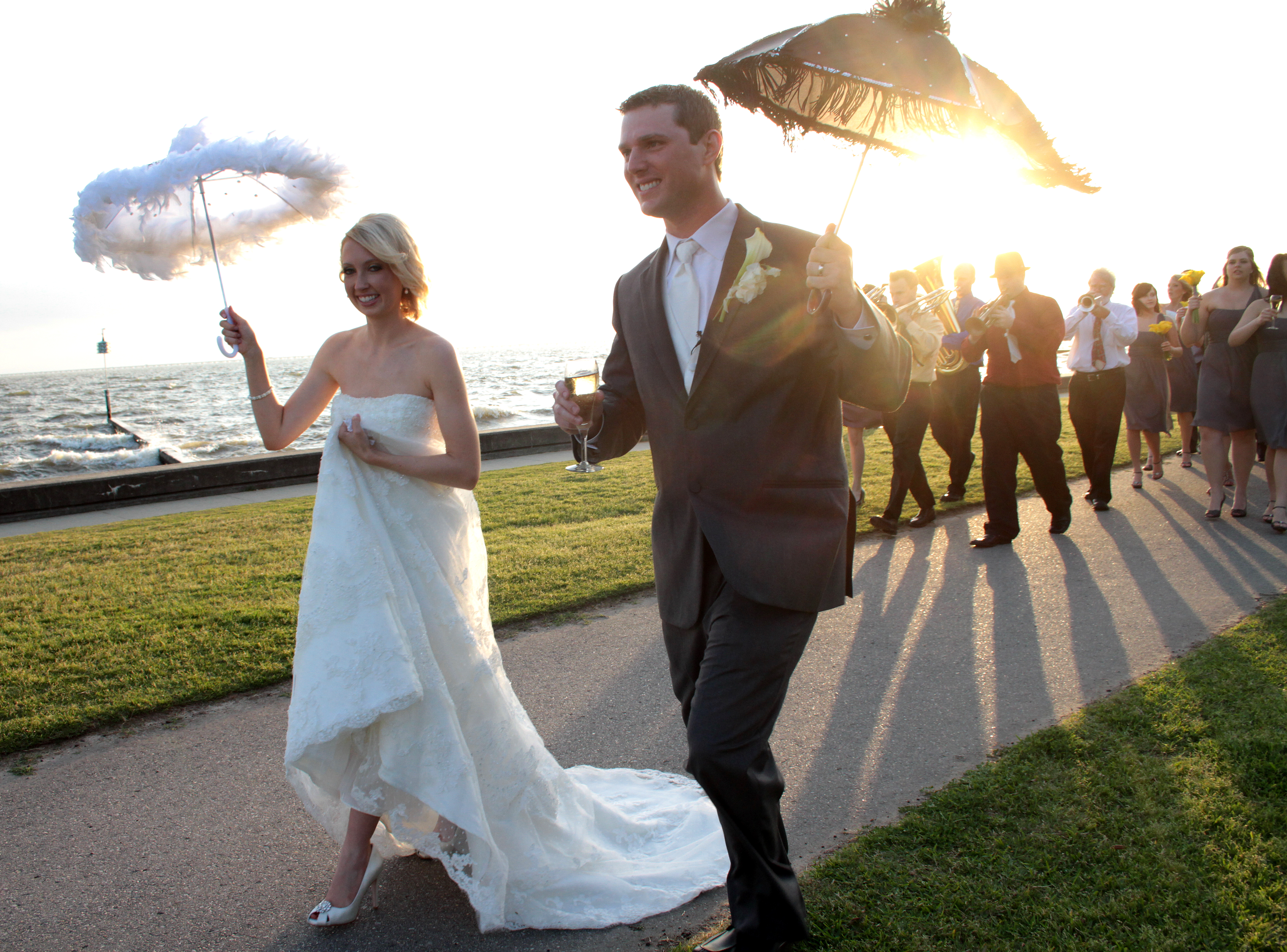
Starting out with a second line celebration

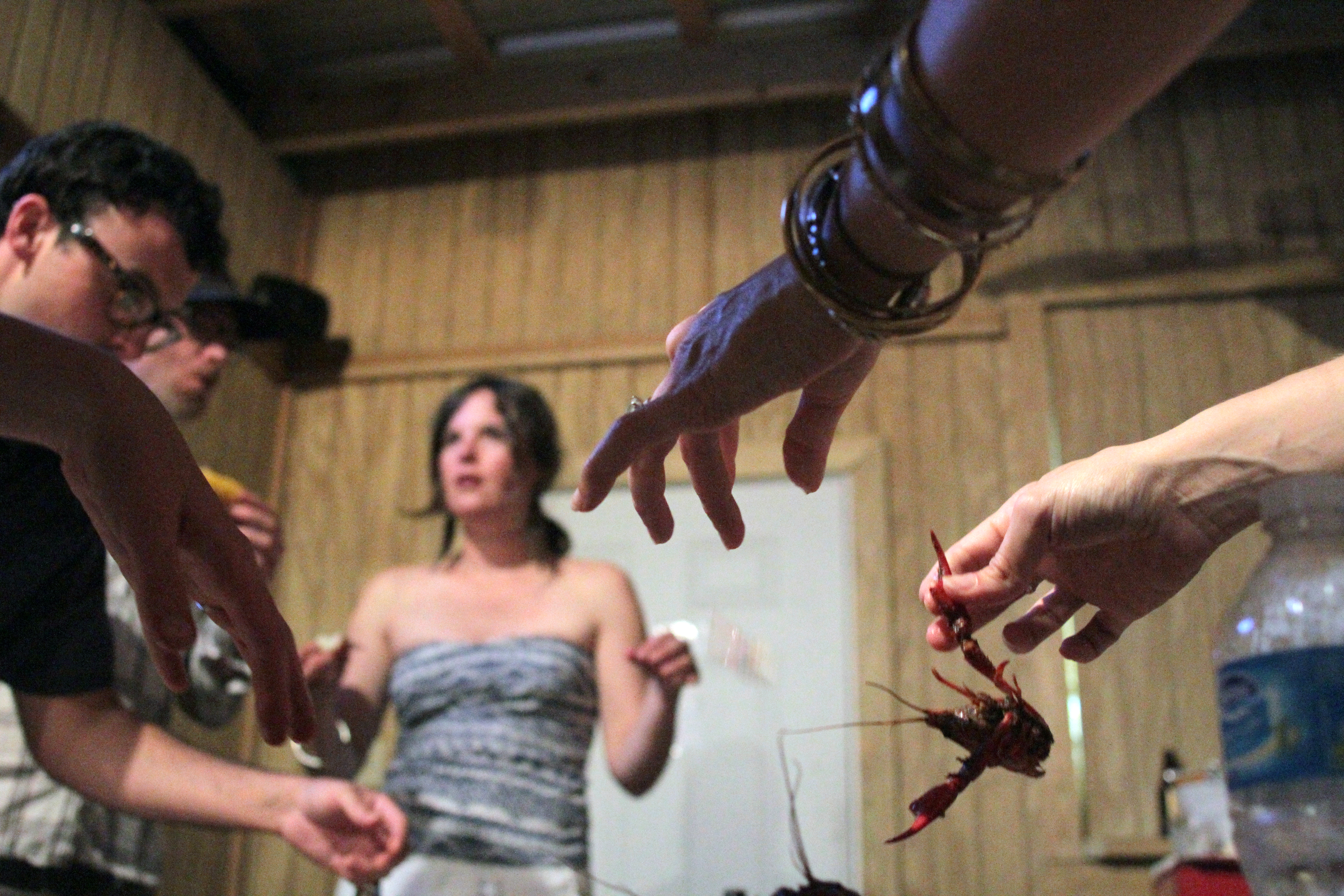
Crawfish boil

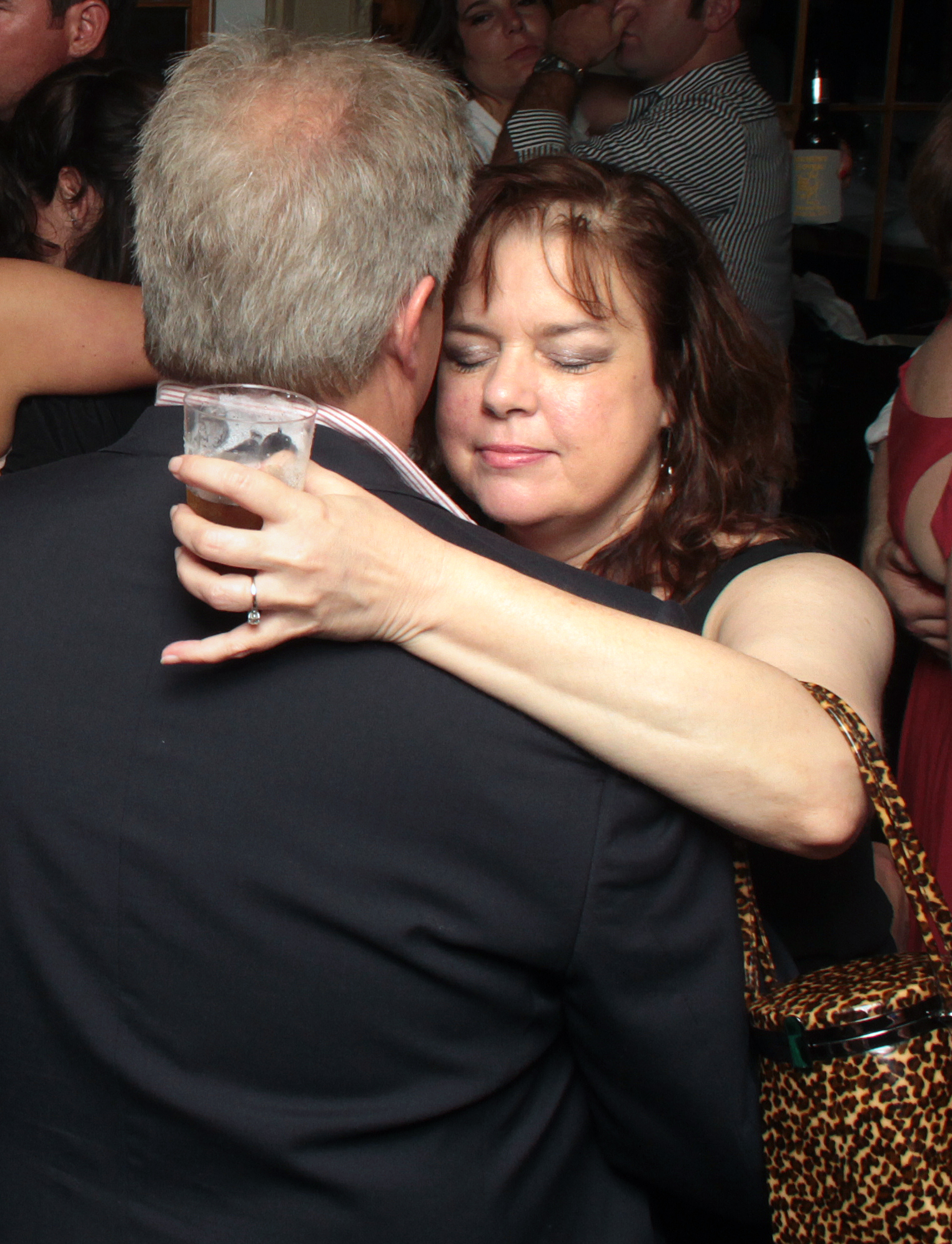
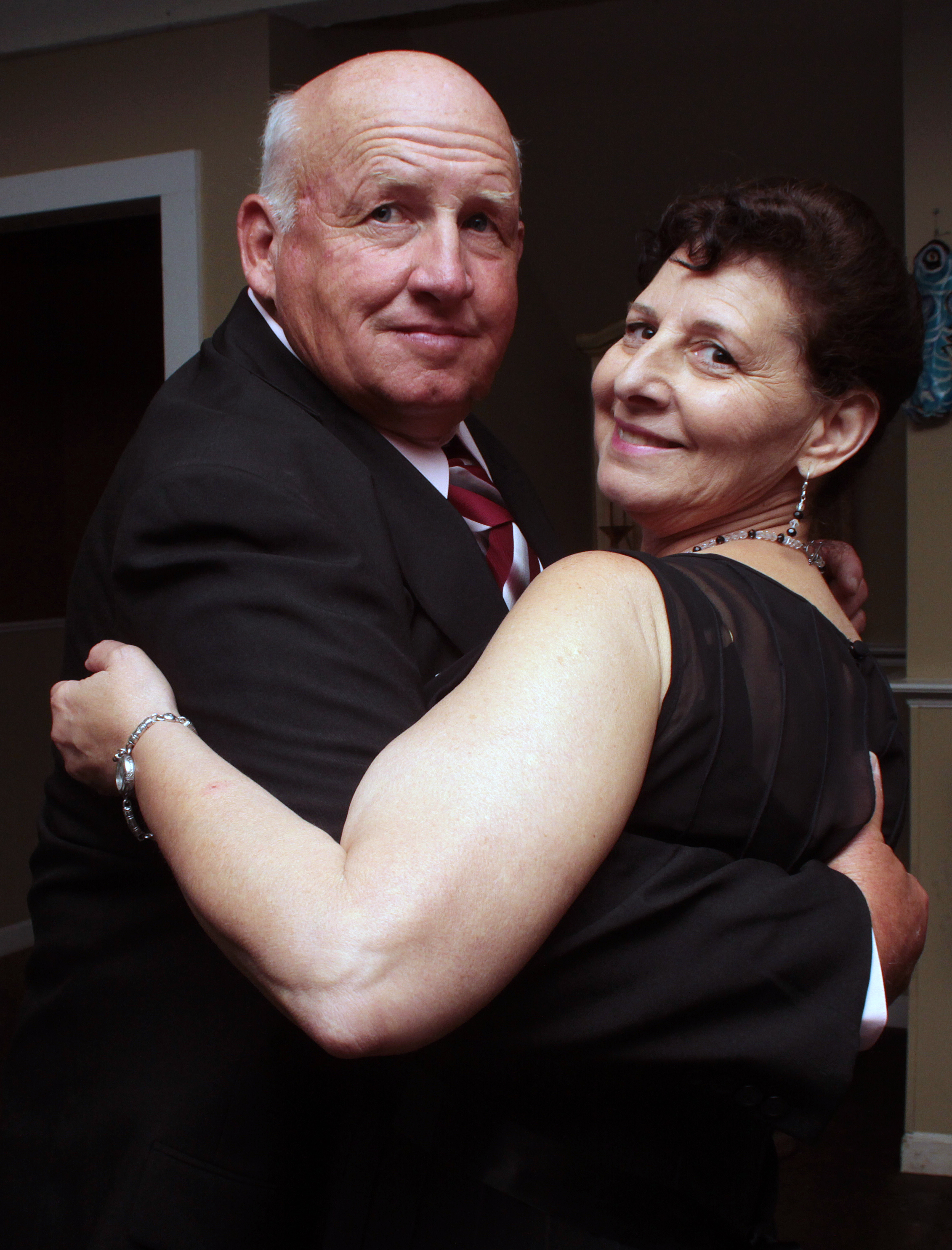
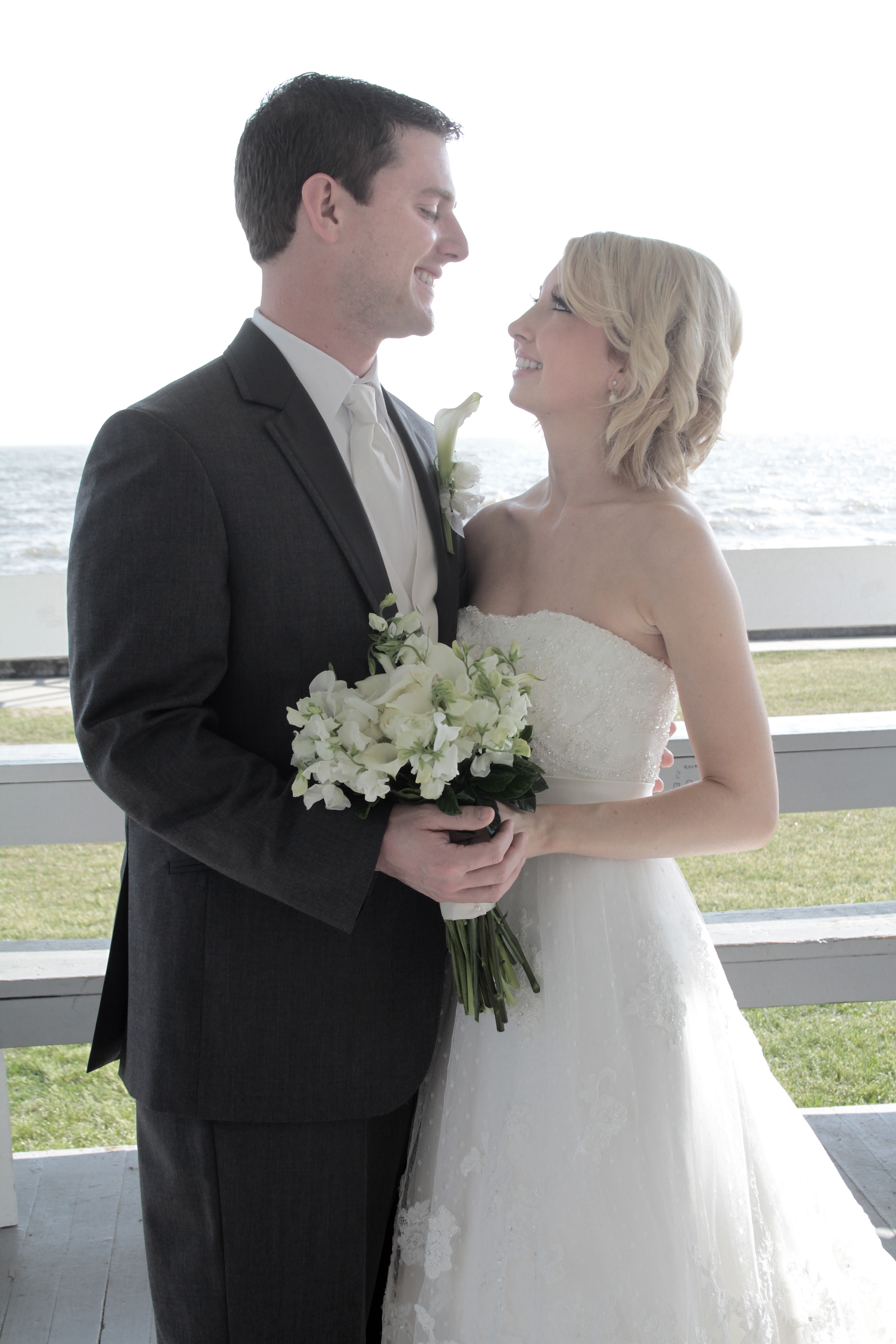
And, of course, the most important things are the moments between the couples

Nicole and John

Melanie and Ben

Melanie and Ben

John and Anna

Anna and John

John and Anna

All of these details work together to make a beautiful wedding and when you are taking a photograph, it is the details that make an interesting image. Never forget to pay attention to everything going on in the photo–all the layers.

light and shadow: an introduction

Every young photographer learns that light and shadow are bread and butter for shutterbugs.

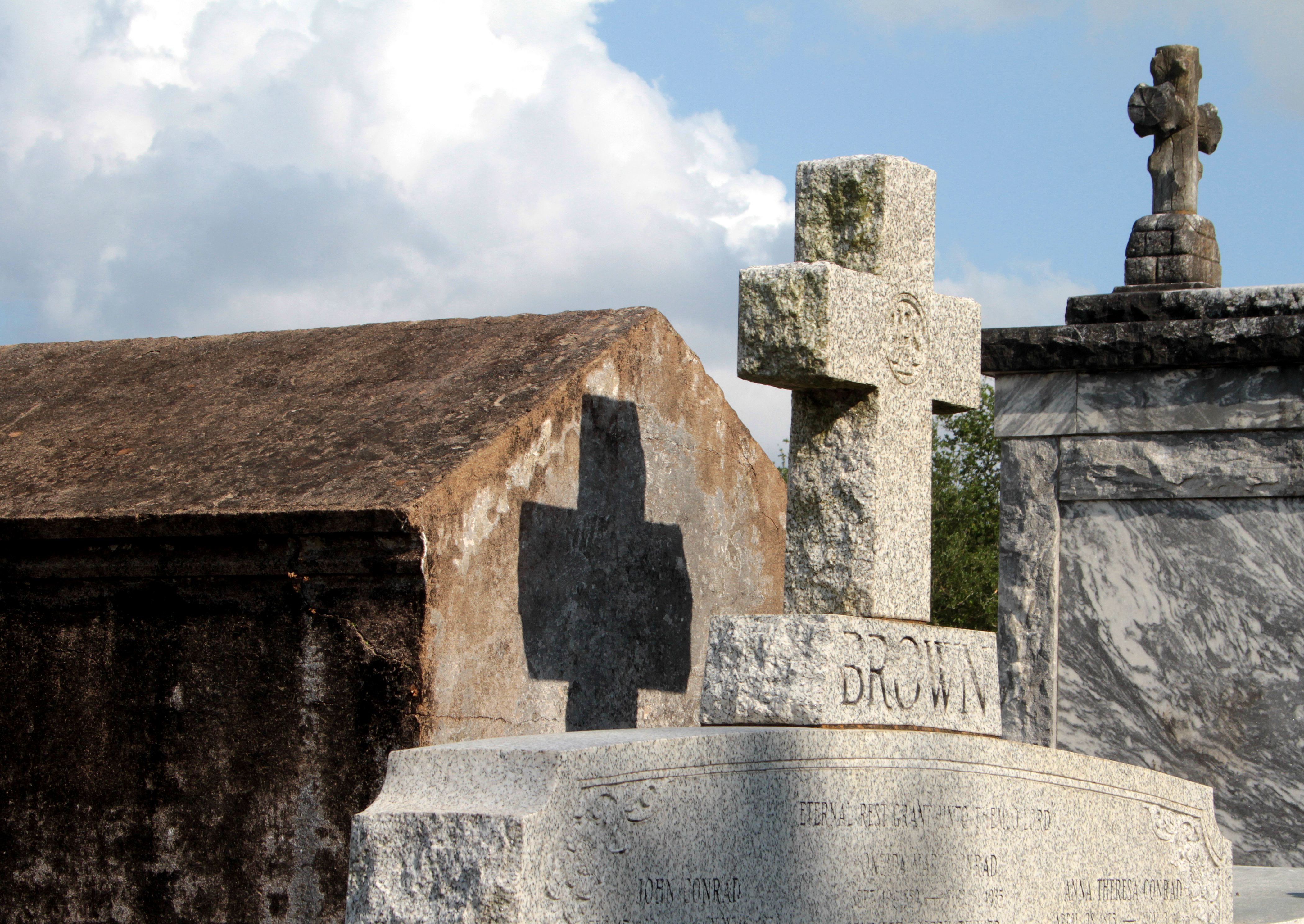
Lake Lawn Cemetery, April 2011

I have been meaning to start a photography blog for years, and after my fiance helped me set it up today, I am finally going to give it a shot. I have been taking pictures since I was a little girl. It has always been an outlet for me to look at the world- somehow I am able to take a closer look through the filter of my lens. If I miss a shot because I don’t have my camera on me or because I hesitate, I think about it for days, weeks or even years. This is probably something I got in part from one of my mentors, a very talented photographer who I worked under at a newspaper in Greeley, Colorado. We were at a bar in Jackson Hole, Wyoming on a photo retreat, and I reached into my bag to grab my camera so that I could capture a funny scene that was playing out before us, but I missed the shot because I had the lens cap on. This is when he told me to throw my lens cap away and I have never again put a cap on my lens nor gone anywhere without at least some form of camera. Seconds are everything in photojournalism. It’s not always about composition, light and subject- sometimes it is simply about being in the right place at the right time and being ready. I studied photography in high school and college, working my way from the dark room to photoshop, and with my degree in journalism I went on to work at a newspaper in Longmont, Colorado where I learned from more talented photographers, one of whom will soon travel down to New Orleans to photograph my wedding.

Photography is my way of meeting people from all walks of life and studying their humanity. Somewhere along the way I decided I wanted to experience the act of helping people from the other side of the lens. I moved to New Orleans in 2008 to study nursing, and about a year ago began working in an emergency room at a very busy hospital on the west bank of the greater new orleans area. Nursing is a very rewarding, though tiring, career. I am happy to have the skill set to not only document the human condition, but also get my hands dirty by physically helping people. My dream now is to practice my nursing abroad, and of course document it along the way. In this new nursing chapter of my life, I never stopped taking pictures. Professionally, I currently mostly shoot weddings, which I love, but I miss journalism. My goals with this blog are to motivate myself to shoot more often and to stay more connected with the photo world, and hopefully along the way I will write or shoot something of interest to someone out there.

For my first post, I was inspired both by an argument with my fiance and some photos I shot when we had guests in from San Francisco. My fiance likes to live in the dark, as living in a tunnel would be his dream home. I, on the other hand, like big windows and lots of sunlight. I guess you could say that with his musical background, he cares more about the auditory nature of his surroundings, whereas I am the more visual one and need the light to see clearly. As I sat down to work on this blog, the sun went down and we argued about turning the lights on. The fact is, however, that both light and darkness are necessary for interesting photos.

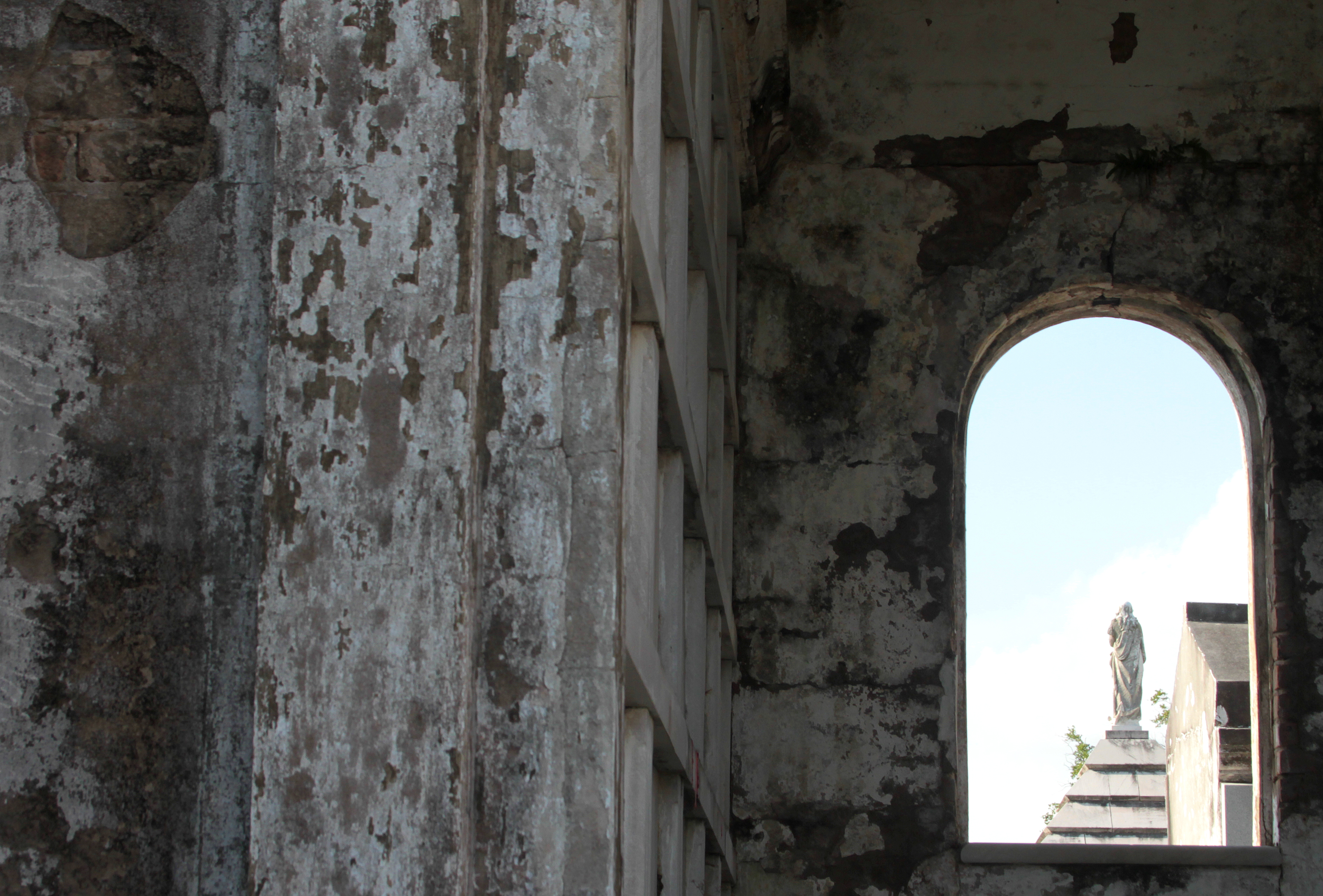
Lake Lawn Cemetery, April 2011

As I said before, every young photographer learns that light and shadow are bread and butter for shutterbugs, but these tools are often taken for granted. While entertaining our guests, we took them to a New Orleans cemetery, or as we like to call it, city of the dead. New Orleans has above the ground cemeteries to prevent flooding and the consequently unsightly image of floating bodies. These static, simple shapes provide a great place to remember the basics of photography. A simple photo of a gravestone is so much more interesting when you pay attention to how the light is cast on the subject, how shadows create their own shapes, what patterns are being created and even how the subject is being framed.

Lake Lawn Cemetery, April 2011